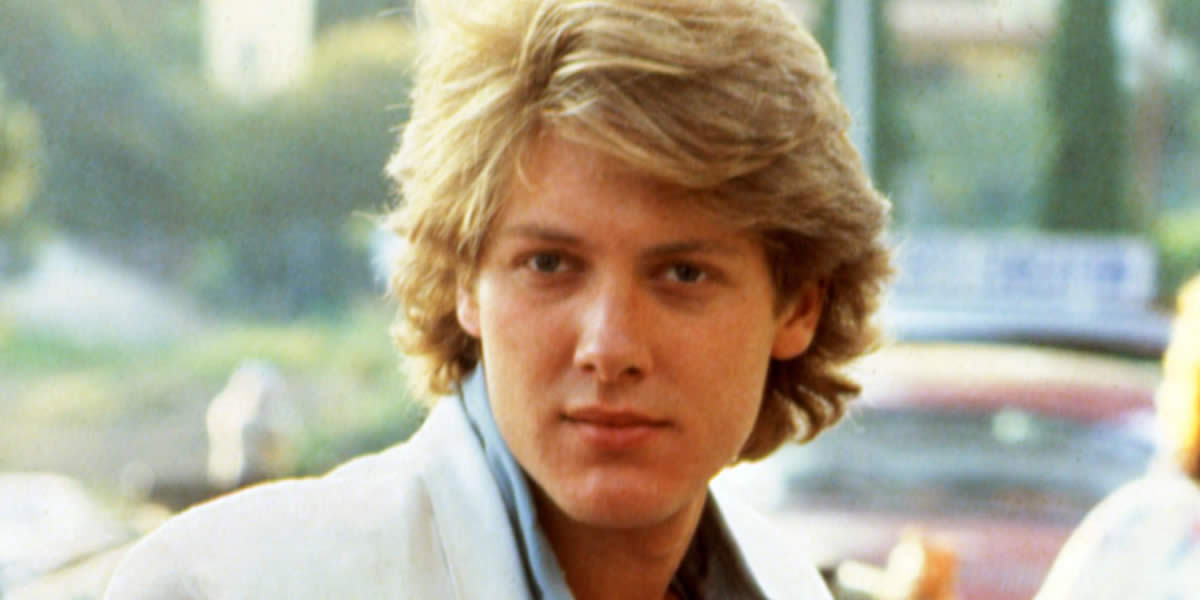
With its sculpted height, swept-back shape, and rock-and-roll roots, the pompadour returned in the 1980s as a statement of individuality that still influences modern style.
Walk into a barbershop in the 1980s and the photographs on the wall might tell several different stories about what a man’s hair should look like. There were feathered layers, closely cropped cuts, curls that spilled over the collar, and the unmistakable mullet, business in front and party in the back. Then there was another silhouette, one that seemed to have arrived from a different decade: hair swept up from the forehead into a prominent wave, its sides neatly controlled and its front shaped into a confident curve.
The pompadour did not belong exclusively to the 1980s. Its history reached back centuries, and its association with rock and roll had been established long before the first music videos appeared on television. But during the 1980s, the hairstyle found new life among musicians, rockabilly enthusiasts, New Wave performers, and men drawn to a more individual approach to grooming.
In an era famous for conspicuous hair, the pompadour offered a distinctive alternative. It could be glossy and precisely combed, with the front raised into a smooth roll, or more irregular and rebellious, with a loose wave that looked as though it might fall into place only to be pushed back again. Some versions recalled the polished rock-and-roll stars of the 1950s. Others incorporated the sharper styling and deliberate theatricality of contemporary music culture.
The pompadour was not the universal men’s haircut of the decade, nor did it replace the more widely seen mullet, flat top , or feathered style. Its importance came from something different. It demonstrated that an older hairstyle could remain relevant by finding new audiences and adapting to new cultural settings.
That is the secret behind its longevity. The pompadour has always been recognizable without being fixed. Its defining feature is the sweep of hair lifted above the forehead, but the height, texture, finish, and surrounding cut can change dramatically. In the 1980s, that flexibility allowed it to move between vintage revival and contemporary fashion, carrying its history without becoming trapped in it.
The Pompadour Was an 80s Hairstyle That Stood the Test of Time The Pompadour’s Long Journey Before the 1980s The pompadour’s name comes from Madame de Pompadour, the influential figure at the court of France’s King Louis XV during the eighteenth century. Her name became associated with a hairstyle in which the hair was swept upward and away from the face, creating height and volume at the front.
Although the hairstyle has become strongly associated with men in modern barbering, its history is not exclusively masculine. Women wore variations of the pompadour and other elevated styles during different periods, including the late nineteenth century and the early twentieth century. The common feature was the arrangement of hair upward and backward to create a raised shape around the forehead.
By the 1950s, the pompadour had acquired a new identity through American popular music. Elvis Presley became its most recognizable male exponent, combining a prominent wave of dark hair with sideburns, expressive performance, and clothing that departed from the restrained appearance expected of many young men at the time.
Presley did not invent the hairstyle, but his influence helped make it a symbol of youthful independence. His appearance was part of a broader cultural shift in which rock and roll offered teenagers new musical tastes, fashions, and ways of presenting themselves. Hair that once might have seemed overly elaborate became associated with performers who challenged conventional ideas about masculinity and respectable behavior.
Other musicians helped establish the pompadour’s place in rock and roll. Little Richard wore spectacularly elevated hair, while Johnny Cash and various rockabilly performers adopted versions of the swept-back look. The style varied from one artist to another, but its basic geometry remained recognizable: volume at the front, direction toward the back, and a deliberate contrast between the raised top and the sides.
The pompadour also became part of a larger visual culture built around leather jackets, denim, vintage cars, and the revival of early rock-and-roll sounds. The hairstyle could signify admiration for the music’s first generation, even when the person wearing it was too young to have experienced that original moment.
By the time the 1980s arrived, this history had become a resource for a new generation. The pompadour was no longer simply a reminder of the 1950s. It was a style that could be recovered, modified, and placed into a different musical landscape.
That distinction matters. Fashion revivals are rarely exact repetitions of the past. They borrow recognizable shapes and meanings, then change them through new materials, new styling techniques, and the attitudes of the people who wear them.
Why the Pompadour Returned in 80s Fashion The 1980s were unusually receptive to visual statements. Music, fashion, and entertainment increasingly overlapped, while performers developed recognizable looks that audiences could identify almost immediately. Hairstyles were central to that process. A distinctive silhouette could communicate musical allegiance, personality, and a sense of belonging before a performer played a note.
The pompadour returned within this broader environment of stylistic experimentation. It was particularly attractive to people interested in rockabilly, a genre and cultural movement that revisited the sounds and aesthetics of early rock and roll. The revival drew on the music of the 1950s, but it also developed its own identity through live performances, record collecting, clothing, and a shared interest in vintage style.
One of the most visible figures in this revival was Brian Setzer, whose work with the Stray Cats helped bring rockabilly back into the popular music conversation. Setzer’s high, carefully shaped hair reinforced the band’s connection to an earlier rock-and-roll tradition. Alongside their musical sound, the band’s visual presentation evoked an era of sharp jackets, narrow trousers, and carefully groomed hair.
The effect was not merely nostalgic. The Stray Cats performed for contemporary audiences, and their revivalist style existed alongside the synthesizers, electronic production, and new fashion movements that defined much of the decade. Their appearance demonstrated that a 1950s-inspired look could be part of the modern music scene rather than a costume reserved for a historical reenactment.
The pompadour also suited a decade in which many people experimented with mixing cultural references. A man might combine a vintage-inspired hairstyle with modern clothing, or wear the classic silhouette while participating in a music scene that had its own contemporary sound. The look could communicate knowledge of rock history without requiring every aspect of a person’s appearance to follow the same period.
This was one reason the pompadour endured while other trends rose and fell. Its historical associations were strong enough to make it distinctive, but its shape was simple enough to adapt. The front could be made taller or lower, the sides could remain full or be cut closer, and the finish could be glossy or relatively natural.
The return of the pompadour was therefore part of a wider conversation between past and present. The 1980s did not simply revive the 1950s. They gave older styles new audiences and new reasons to wear them.
From Rockabilly Revival to New Wave Cool Although rockabilly provided the clearest link between the 1980s pompadour and its earlier history, the hairstyle also appeared in a wider musical landscape. New Wave, post-punk, and alternative rock encouraged musicians to experiment with appearance, often using hair as an extension of their artistic identity.
New Wave styling did not have one uniform look. Some musicians favored angular cuts, others used dramatic colors or sculpted shapes, and many moved between polished and deliberately disheveled appearances. The pompadour’s raised front made it a useful starting point for this kind of experimentation.
Roger Taylor of Duran Duran provides one example of how the elevated front could appear within the era’s image-conscious pop culture . The band became closely associated with the visual ambitions of the 1980s, when music videos helped establish a performer’s style as part of the audience’s experience of the music. A lifted, swept-back hairstyle could fit that polished presentation while retaining a recognizable connection to earlier men’s grooming traditions.
Morrissey, the singer of the Smiths, offered a different interpretation. His prominent quiff and pompadour-like volume became part of his recognizable appearance during the decade. The shape had historical echoes, but it also worked within the band’s particular image, which often combined romanticism, self-consciousness, and an alternative sensibility.
These examples show why it is misleading to treat the 1980s pompadour as a single, standardized haircut. The term describes a family of related shapes rather than one precise arrangement. In some versions, the hair formed a smooth, continuous roll. In others, the front rose in a more broken wave, with texture and separation visible across the top.
The cultural meaning shifted with the wearer. On a rockabilly musician, the pompadour could signal affection for the original era of rock and roll. On a New Wave performer, it could become part of a more modern, carefully constructed image. On someone outside the music industry, it might simply be a preferred haircut that looked sharp and different from the prevailing styles.
Music television and photography helped these variations travel. A viewer could encounter a hairstyle through a music video, a magazine photograph, an album cover, or a performance on television, then adapt the basic idea for everyday use. The audience did not have to belong to the same scene as the performer to borrow a feature of the look.
The pompadour’s flexibility made it especially well suited to this exchange. It could carry its past into a new setting without losing the central shape that made it recognizable.
The Shape That Made the Pompadour Different The pompadour is defined less by a particular length than by the direction and volume of the hair. The front is lifted upward and generally swept backward, creating a curved or raised profile above the forehead. The sides are usually arranged to support the shape rather than compete with it.
That sounds straightforward, but the difference between a pompadour and a conventional swept-back haircut can be significant. A style in which the hair lies close to the scalp may follow the same backward direction, yet it lacks the height and rounded front that identify the pompadour. Conversely, a tall hairstyle that stands straight up may have volume but not the characteristic sweep.
In the 1980s, the look could be adjusted to suit different hair lengths and personal preferences. A classic rockabilly version often retained enough length at the sides and back to create a continuous, vintage-inspired silhouette. A more contemporary cut might reduce the sides and emphasize the height at the front, making the shape appear cleaner and more defined.
Texture also changed the result. Straight hair could be combed into a smooth wave, while naturally wavy hair might create a softer, more irregular outline. The hairstyle did not need to be perfectly symmetrical. Small variations in the front could make it look more relaxed or more dramatic.
The proportions were important. Too little length at the front limited the amount of lift, while excessive height could make the style difficult to balance with the rest of the head. The shape worked best when the top, sides, and back appeared to belong to the same haircut, even if they differed in length.
This is one reason the pompadour has been easy to reinterpret across generations. Its defining principle is clear, but there is room for personal judgment. A barber can change the outline without abandoning the essential form.
The style also makes a strong impression in profile. The raised front creates a visible curve that changes the head’s silhouette, while the swept-back direction draws attention away from the forehead and toward the crown. Even a modest pompadour can look more deliberate than a haircut that simply follows the natural fall of the hair.
In an era when hairstyles often emphasized either extreme volume or dramatic differences in length, the pompadour offered a distinct balance of control and height. Its appeal lay in the fact that it looked constructed, yet could be adapted to the wearer.
Pomade, Combs, and the Daily Work of Styling The pompadour’s shape depends on more than a haircut. It also requires a styling routine that lifts the front, directs the hair backward, and keeps the form in place. For much of the style’s history, pomade has been one of the products most closely associated with that task.
Traditional pomades create a smooth, often shiny finish and help keep hair arranged in a consistent direction. For the classic pompadour, that quality is useful because it allows the front to be shaped into a continuous wave rather than a collection of separate strands.
The 1980s offered a broader range of styling products than earlier generations had known. Gels, sprays, mousses, and other formulations gave people different ways to control texture and hold. The best choice depended on the desired finish. A rockabilly-inspired look might call for a glossy surface, while a less formal version could use lighter products to retain movement.
The basic process involved drying the hair in the desired direction, lifting the front, and using a comb or fingers to shape the curve. A blow-dryer could help establish volume and control the direction of the hair. Product would then provide hold and help maintain the finished outline.
The amount of effort varied. A modest pompadour might take only a few minutes once the wearer had learned the technique. A taller, more carefully sculpted style could require more time and several adjustments. Hair length, density, and natural texture all influenced how easy the shape was to create.
Maintenance was part of the commitment. Wind, humidity, and movement could disturb the front, while a product-heavy style might need washing and restyling more frequently. A person who wanted the same silhouette every morning had to learn not only how to create it but how to maintain it.
The ritual could become familiar. The mirror, the comb, the product, and the final adjustment were small parts of preparing for the day. Like choosing a jacket or polishing a pair of shoes, styling the hair offered a way to complete a personal presentation.
There were practical limits, of course. Too much product could make the hair look greasy or stiff, and excessive heat or rough handling could damage it. A successful pompadour relied on proportion and technique rather than simply adding more product.
That practical dimension helps explain the style’s staying power. Although its appearance could be dramatic, the basic method was accessible. The pompadour could be created at home with ordinary grooming tools, then adjusted over time as the wearer developed a preferred version.
What the Pompadour Said About Masculinity and Individual Style Men’s hair has long carried social meaning. Length, neatness, texture, and shape can signal ideas about respectability, rebellion, age, occupation, or membership in a cultural group. The pompadour has moved through several of these categories over its long history.
In the 1950s, the hairstyle became associated with rock-and-roll youth culture, partly because performers such as Elvis Presley and Little Richard made it a visible part of their public images. For some young men, adopting the look was a way to distinguish themselves from the shorter, more restrained grooming associated with older generations.
By the 1980s, those original associations had become historical references. Wearing a pompadour could suggest an interest in the roots of rock music or an appreciation for a carefully groomed, vintage-inspired appearance. It did not necessarily communicate rebellion in the same way it had in the 1950s, but it retained a recognizable connection to rock-and-roll independence.
The look also complicated the idea that masculine grooming should be simple or unremarkable. A well-shaped pompadour required attention. The wearer had to consider how the hair fell, where the volume sat, and whether the sides complemented the front. That effort did not make the style less masculine; rather, it demonstrated that precision and personal presentation could be part of masculine identity.
The pompadour could also be worn with different clothing styles. Paired with a leather jacket and narrow jeans, it might reinforce a rockabilly image. With a sharper jacket or more contemporary casual clothes, it could appear polished without looking like a complete period recreation. The same hairstyle could support different identities because the surrounding details changed its meaning.
That flexibility was important in the 1980s, when popular culture offered many overlapping versions of masculinity. Musicians could cultivate glamorous, theatrical, tough, romantic, or deliberately unconventional images. Their hairstyles became part of that vocabulary.
The pompadour did not belong to every man, and its revival remained more closely tied to particular music and style communities than to mainstream grooming as a whole. But within those communities, it offered a visible way to express taste and individuality.
Its appeal rested on a simple proposition: a hairstyle could be traditional in shape and still feel personal. The wearer could draw on a familiar silhouette while deciding how much height, shine, texture, and precision to bring to it.
Why the Pompadour Survived When Other 80s Hairstyles Faded Many hairstyles become inseparable from the decade in which they were most visible. The largest perms, the most exaggerated mullets, and some of the era’s heavily sculpted looks are now often recognized as distinctly 1980s. The pompadour has had a different trajectory because it was never tied to only one decade.
Its history stretches back through earlier periods, and its revival in the 1980s connected it to an established musical tradition. When fashions changed in the 1990s, the pompadour did not have to disappear completely. It could continue within rockabilly communities and among people who preferred a classic, carefully groomed look.
The style also benefits from its adaptability. A very high, glossy pompadour looks different from a shorter version with textured hair and close-cut sides, yet both retain the characteristic lift at the front. That means the hairstyle can change in response to contemporary tastes without losing its identity.
Modern barbering has made this adaptability especially visible. Current versions may combine a voluminous top with tapered sides or a fade, producing a sharper contrast than many traditional cuts. Others preserve more length around the head and use a softer finish. The central shape remains, but the details reflect the period and the wearer’s preferences.
Products have evolved as well. Modern styling clays, pastes, creams, and pomades offer different degrees of shine, flexibility, and hold. A wearer can choose a polished finish that recalls classic rockabilly or a matte texture that looks less formal. The hairstyle is no longer dependent on one particular product or a single standard of grooming.
Its continued presence in popular culture also reflects the way fashion revisits the past. The pompadour can evoke vintage cars, early rock and roll, and mid-century style, but it can also be detached from those associations and treated simply as a strong haircut. People may appreciate its shape without knowing its full history.
This is the difference between a trend that survives only as a costume and a style that remains useful. A costume depends on reproducing a particular moment. A durable hairstyle gives people enough room to make it their own.
The pompadour has survived because it offers both a clear identity and considerable freedom. It can be traditional or modern, restrained or dramatic, glossy or textured. Its most recognizable feature has stayed in place while almost everything around it has changed.
The Pompadour’s Lasting Place in Hair History The pompadour’s journey through the 1980s is a story of revival rather than invention. The decade did not create the hairstyle, but it gave the old shape fresh contexts, from rockabilly performances to the carefully styled world of New Wave and alternative music.
That return reveals something important about the way cultural trends work. A style can disappear from mainstream fashion without losing its appeal entirely. It may survive in a subculture, in the image of a musician, or in the memory of an earlier era, waiting for the right moment to be rediscovered.
The 1980s provided that moment for the pompadour. Musicians such as Brian Setzer brought the classic rockabilly silhouette back into view, while other performers demonstrated how a raised, swept-back front could fit into newer musical identities. The hairstyle remained recognizable even as its details and meanings shifted.
Its lasting influence is visible in contemporary barbering, where variations of the pompadour continue to offer a way to combine height with a controlled outline. Today’s versions may be shorter at the sides, less glossy, or more loosely textured, but the essential curve remains familiar.
There is a practical reason for that endurance. The pompadour changes the shape of a haircut without requiring an entirely unusual structure. It gives the wearer a strong silhouette, allows considerable variation, and can be adapted to different hair types and personal tastes.
There is also a cultural reason. The hairstyle carries a long association with music, individuality, and the idea that grooming can be an expression of identity. Those associations have changed over time, but they have not vanished.
The pompadour was not the defining hairstyle of every man in the 1980s. It belonged more clearly to particular musical and fashion communities, where its history made it meaningful. But its presence during the decade helped keep the style visible and available for future generations.
That is what it means for a hairstyle to stand the test of time. It does not have to remain fashionable in exactly the same form, nor must it dominate every barbershop window. It needs a shape strong enough to be recognized and flexible enough to be reinvented.
The pompadour has both. From the polished wave of early rock and roll to the varied interpretations of the 1980s and the modern cuts seen today, it has repeatedly found new ways to rise above the forehead and move forward.