From Ralphie’s Red Ryder BB gun to the infamous leg lamp, A Christmas Story turned an ordinary 1940s family Christmas into an enduring portrait of childhood, tradition, and holiday nostalgia.
Snow drifts along the sidewalk. A department store window glows with toy trains, dolls, and carefully arranged Christmas gifts. Inside a modest Midwestern house, a father struggles with a temperamental furnace, a mother keeps the household moving, and a boy studies the toy advertisements with the intensity of a military strategist. Somewhere in the middle of all this, a pink bunny suit waits to become a family embarrassment.
The world of A Christmas Story is familiar even to people who did not grow up in the era it depicts. Its houses feel lived in, its winter clothes look genuinely uncomfortable, and its Christmas morning is crowded with the small disappointments and unexpected pleasures that make family holidays memorable. Released in 1983, the film looks backward to an American childhood in the 1940s, but its affectionate understanding of family life helped make it one of the defining holiday movies of the 1980s.
The movie’s central wish is wonderfully uncomplicated. Young Ralphie Parker wants a Red Ryder BB gun for Christmas. Adults repeatedly tell him that he will shoot his eye out, and Ralphie responds by turning the desired toy into the central mission of his young life. Around that wish gather schoolyard dares, department store Santas, neighborhood bullies, household arguments, and a father whose temper is matched only by his attachment to a ridiculous lamp.
Directed by Bob Clark and narrated by humorist Jean Shepherd, A Christmas Story did not initially arrive as the enormous seasonal institution it would eventually become. Its reputation grew over time, helped by television broadcasts that brought it into living rooms year after year. Today, it feels like a film that has always belonged to Christmas, although its journey to that position is part of the story.
Its nostalgia is also more complicated than a collection of old-fashioned decorations. The movie remembers childhood as a world of limited choices, enormous expectations, private fantasies, and adults who seem to possess mysterious authority. It understands that Christmas is not simply a date on the calendar. For a child, it is a deadline, a negotiation, and the possibility that one extraordinary object might change everything.
A Christmas Story Looked Back Before the 80s Had Become Nostalgia
When A Christmas Story reached theaters in November 1983, the decade was still young. The United States was experiencing the rise of cable television, the popularity of home video, and a consumer culture increasingly shaped by new technology and aggressive advertising. Yet the movie’s setting belonged to a different America, one of postwar childhoods, neighborhood department stores, family dinners, and toys chosen from printed catalogs.
That distance gave the film a distinctive perspective. Rather than trying to capture the latest fashions or trends of the early 1980s, it reconstructed a remembered world that was already several decades old. The 1940s setting allowed audiences to encounter the rituals of an earlier Christmas while recognizing emotions that had not changed much.
Children still wanted the one gift they believed would make the holiday complete. Parents still worried about money, safety, behavior, and the practical business of getting everyone through December. A family could argue over something ridiculous and then sit down to dinner as though the argument had never happened.
The movie’s period details are essential, but they do not feel like a museum display. The Parker house is cramped and busy. Furniture has a purpose. Winter coats are bulky. The kitchen is a working space, and the dining room is where the family’s competing moods eventually meet. Even the Christmas decorations seem to occupy space rather than exist solely for the camera.
The Library of Congress recognized the film’s cultural and historical value in 2012, selecting it for the National Film Registry. Its description emphasized the detail with which the movie evokes the flavor of its period and the human observations embedded in seemingly ordinary moments.
That recognition helps explain why the film’s nostalgia feels so convincing. It does not depend on one grand image of a perfect American Christmas. It builds a world out of recognizable particulars: the trip to see Santa, the anticipation of a gift, the embarrassment of being dressed by a parent, and the uncomfortable realization that adults are not nearly as composed as children imagine.
The 1980s audience was not simply watching an old-fashioned Christmas. It was watching a film about memory, made at a time when the decade’s own childhoods were still fresh for many adults. Over the years, the movie would become part of the seasonal tradition it originally observed from a distance.
Jean Shepherd Turned Childhood Memories Into Christmas Comedy
The film’s unusual warmth begins with Jean Shepherd, the writer and radio personality whose stories supplied its material. Shepherd had a distinctive talent for turning small childhood experiences into elaborate comic recollections. A schoolyard dare, a family purchase, or a moment of humiliation could expand in his telling until it felt like a decisive event in the history of a young person’s life.
The screenplay drew primarily from stories collected in Shepherd’s 1966 book In God We Trust: All Others Pay Cash, along with material from his other writing. The film was not a straightforward autobiography, but it borrowed heavily from the atmosphere and experiences of his youth in Hammond, Indiana, reimagined as the fictional town of Hohman.
Shepherd also narrates the movie as the adult Ralphie, giving the film a double perspective. The child experiences each event with immediate urgency, while the adult voice can recognize the absurdity of the situation. This combination allows the movie to laugh at childhood without dismissing it.
A BB gun may seem like a modest request to a parent, but to Ralphie it represents independence, adventure, and the chance to possess something that belongs entirely to him. The adults’ objections only intensify the importance of the dream. Every warning becomes another obstacle in a personal epic.
Shepherd’s narration is crucial because it preserves the logic of childhood. Ralphie does not think in measured adult proportions. He imagines consequences, rehearses conversations, and invests small encounters with enormous significance. A teacher’s response to a school assignment can feel as important as a diplomatic summit. A department store Santa can become the final authority on whether Christmas will be a success.
The humor comes from the distance between the boy’s expectations and the world’s indifference. The adults have their own worries and routines. They do not always understand why Ralphie’s wish matters so much, and when they do pay attention, they often respond in ways that make the situation worse.
That is one reason the movie has remained accessible across generations. Its memories are specific to a certain time and place, but its emotional structure is universal. Almost everyone remembers wanting something desperately, believing an adult had ruined everything, or feeling that a small humiliation would be remembered forever.
Ralphie’s Red Ryder BB Gun Became the Ultimate Christmas Wish
The Red Ryder BB gun is the movie’s organizing obsession. Ralphie encounters the idea through the world of advertising and toy marketing, then carries it into nearly every corner of his life. He imagines what it would mean to own the gun, rehearses how he might persuade his parents, and anticipates the excitement of finding it beneath the Christmas tree.
The object is important partly because it is so ordinary. It is not a magical artifact or an impossibly expensive luxury. It is a toy gun that a boy has convinced himself he must have. Its power comes from the intensity of his desire rather than any special quality the audience needs to understand.
This is where the movie captures the emotional economy of a child’s Christmas. Adults might see a list of gifts, each with a price and a practical purpose. A child can divide the entire holiday into two categories: the gift that matters and everything else.
The warning that Ralphie will shoot his eye out becomes the refrain of his campaign. It follows him from one conversation to another, making his wish seem both more urgent and less attainable. The more he hears it, the more determined he becomes to find someone who will take his request seriously.
The film also recognizes how advertising can turn a product into a fantasy. Catalogs and promotional displays do not simply show children what is available. They help shape what children imagine themselves becoming. The right toy can promise courage, competence, adventure, or a sense of adulthood.
Ralphie’s fascination with the BB gun is not just about the object itself. He wants to be the sort of boy who owns one. He wants to imagine himself capable, adventurous, and independent. The gift has become a symbol of the person he hopes to be.
For viewers who grew up before online shopping and personalized digital advertising, the film recalls a more physical holiday marketplace. Children studied catalogs, visited store windows, and made their wishes known through conversations with parents and relatives. The process involved waiting and uncertainty. There was no instant confirmation that the item was available or on its way.
That delay is part of the movie’s charm. Ralphie has time to imagine the gun, fear that he will not receive it, and prepare himself for disappointment. Christmas morning eventually resolves the suspense, but the emotional journey is what makes the gift memorable.
The Parker Family Made Christmas Feel Messy and Real
At the center of A Christmas Story is a family that is loving without being especially sentimental. The Parkers do not resemble a polished holiday advertisement. Their home is full of competing needs, petty frustrations, household chores, and jokes that do not always land.
Darren McGavin plays Ralphie’s father, known simply as the Old Man. He is proud, irritable, opinionated, and capable of turning a minor inconvenience into a full-scale confrontation. His feud with the furnace is a recurring source of comedy. The machine seems to have its own personality, and the Old Man treats its mechanical failures as personal insults.
Yet the character is more than a comic grouch. He is a working father who wants his family to be comfortable and who takes pride in certain achievements, even when nobody else appreciates them. His attachment to the furnace, his enthusiasm for the car, and his delight in the major prize he wins all suggest a man whose private pleasures are not always easy to express.
Melinda Dillon’s Mrs. Parker provides a different kind of authority. She manages the household, negotiates the children’s behavior, and often absorbs the emotional consequences of her husband’s moods. Her performance is understated. She can be patient, exasperated, amused, and firm, sometimes within the same scene.
Ralphie’s younger brother Randy contributes another layer of domestic realism. He is fussier and more dependent than Ralphie, especially around food and clothing. His reluctance to eat dinner and his discomfort in winter clothes are familiar family problems, made funnier because the adults have to deal with them while attempting to maintain some sense of order.
The movie understands that Christmas rarely unfolds according to a neat emotional plan. Parents can be exhausted. Children can be unreasonable. Gifts can disappoint. A household can be loud and affectionate at the same time.
This is one of the film’s strongest contributions to holiday cinema. It does not insist that a family must become perfectly harmonious before Christmas can count as a success. The Parkers remain themselves throughout the holiday, with their flaws and habits intact. What matters is not that they stop arguing, but that their relationships endure the arguments.
That quality has helped the movie age well. Its family life is rooted in the 1940s, but it avoids presenting the past as a flawless golden age. The Parkers are not living in an idealized world. They are simply trying to get through winter, manage money, keep the children safe, and make Christmas feel special.
The Pink Bunny Suit and Leg Lamp Turned Ordinary Life Into Legend
If Ralphie’s BB gun supplies the central wish, the pink bunny suit and the leg lamp provide two of the film’s most enduring comic images.
The bunny suit arrives through Aunt Clara, whose gift is well meant but disastrously mismatched with Ralphie’s sense of dignity. The outfit is soft, oversized, and impossible to wear without becoming a spectacle. Ralphie knows immediately that he looks ridiculous. His family’s reaction confirms the verdict.
The scene works because it captures a particular kind of childhood embarrassment. Adults can believe they have done something wonderful while remaining completely unaware of how humiliating it feels to the child. The gift becomes a public declaration that the child has no control over his own appearance.
Ralphie’s discomfort is intensified by the fact that he cannot simply refuse the outfit without creating another problem. He must wear it, stand there while his family reacts, and endure the indignity until the moment passes. For a boy who dreams of being independent, the bunny suit is a temporary defeat.
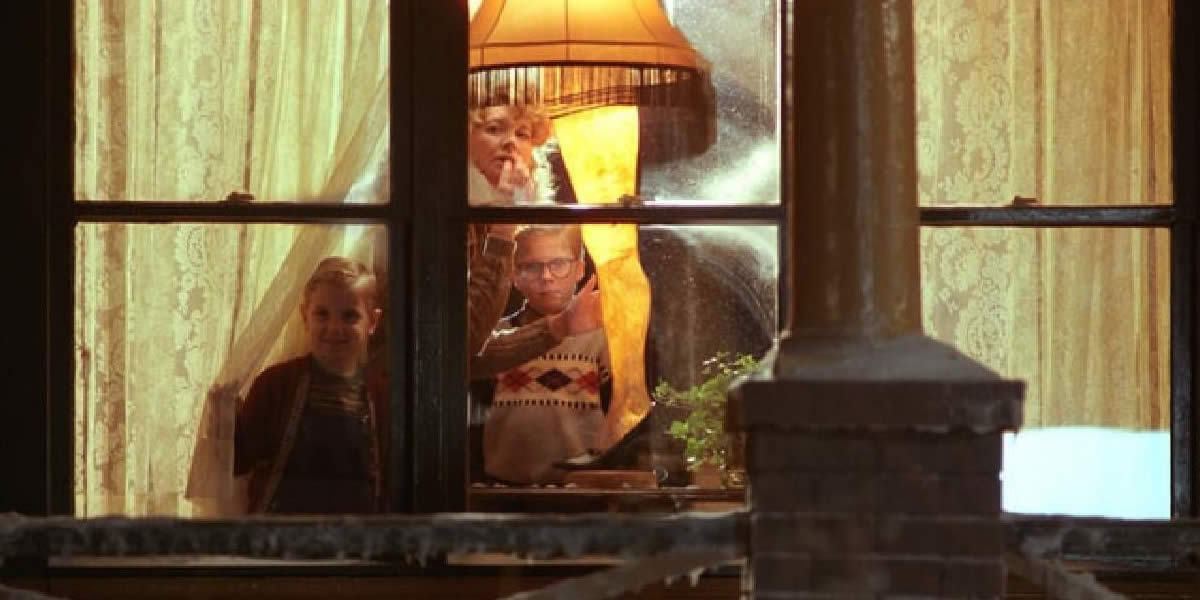
The leg lamp is the Old Man’s triumph. When he wins the illuminated novelty prize, he treats it as an achievement worthy of a place of honor in the front window. Its exaggerated shape and theatrical glow make it impossible to ignore. The lamp is at once a source of pride, an eyesore, and a symbol of the gap between the father’s taste and the mother’s patience.
The family dispute surrounding it gives the movie a different form of comedy from Ralphie’s toy campaign. Here, the joke concerns adult vanity. The Old Man wants recognition for his prize, while Mrs. Parker would rather not have it displayed so prominently. Neither side can fully appreciate the other’s point of view.
The lamp has since become one of the film’s most recognizable symbols, reproduced in seasonal decorations and novelty merchandise. Its popularity demonstrates how a small comic detail can outgrow its original purpose. A prop that begins as a joke about household taste becomes a shorthand for the movie itself.
Both the bunny suit and the leg lamp also help prevent the film’s nostalgia from becoming too tidy. They are odd, inconvenient, and faintly embarrassing. They remind viewers that family traditions are not always beautiful. Sometimes the stories that survive are the ones everyone would rather forget at the time.
The Department Store Santa Captured the Pressure of Christmas
For Ralphie, the visit to Santa is meant to be a decisive moment. The department store is full of holiday spectacle, with decorations, displays, and the promise that one conversation might settle the question of what he will receive. The trip has all the ingredients of a treasured seasonal memory, but it becomes a small disaster.
The Santa scene is one of the movie’s most effective observations about childhood. Adults often treat the department store visit as a charming tradition, assuming that the children will be delighted by the decorations and the chance to meet Santa. For the child, however, the encounter can be intimidating. There is a long line, an unfamiliar figure in an elaborate costume, and an expectation to speak clearly at exactly the right moment.
Ralphie approaches the encounter with his wish prepared, but the scene does not unfold according to his plan. The atmosphere becomes overwhelming, and his chance to make the request turns into a struggle to get through the experience at all.
The humor depends on the contrast between the carefully arranged holiday fantasy and the child’s actual response. The store has constructed an ideal Christmas environment, but no amount of decoration can guarantee that a child will feel comfortable inside it.
The scene also reflects the way department stores helped shape the American Christmas. By the middle of the twentieth century, seasonal window displays, toy departments, decorated shopping floors, and visits with Santa had become familiar parts of holiday culture. Stores offered families a place to see the season made visible, even as they encouraged the purchase of gifts.
In the film, the department store is both magical and commercial. Ralphie sees possibilities. The adults see a crowded public outing that must be completed. The employees keep the line moving. Everyone participates in the same ritual, but not everyone experiences it in the same way.
That tension is part of what makes the scene so durable. The movie does not mock the desire to believe in Christmas. It recognizes how difficult it can be to live up to the expectations built around it. The holiday is full of moments when children are supposed to be delighted, grateful, polite, and patient, even when they are tired or overwhelmed.
Ralphie’s visit to Santa is funny because it goes wrong, but it is also sympathetic. The boy has placed enormous importance on one conversation, and the world refuses to cooperate.
A Christmas Story Was Set in the 1940s, but It Spoke to the 80s
The movie’s relationship with the 1980s is a little unusual. Its characters do not wear the decade’s fashions, listen to its popular music, or use its emerging technologies. The story looks back to a period before television became the dominant presence in American family rooms and before consumer electronics transformed children’s entertainment.
Yet the film’s 1983 release gave that earlier world a new audience. Viewers could recognize its portrayal of family expectations even if their own childhoods had included different toys, different clothes, and different household routines.
The 1980s were a decade of rapid change in entertainment. Cable channels expanded viewing choices, video rental stores made films available beyond their theatrical runs, and home video gradually changed the relationship between audiences and movies. A film no longer needed to disappear from public view once its theatrical engagement ended. It could return to homes, be watched repeatedly, and become part of a family’s own traditions.
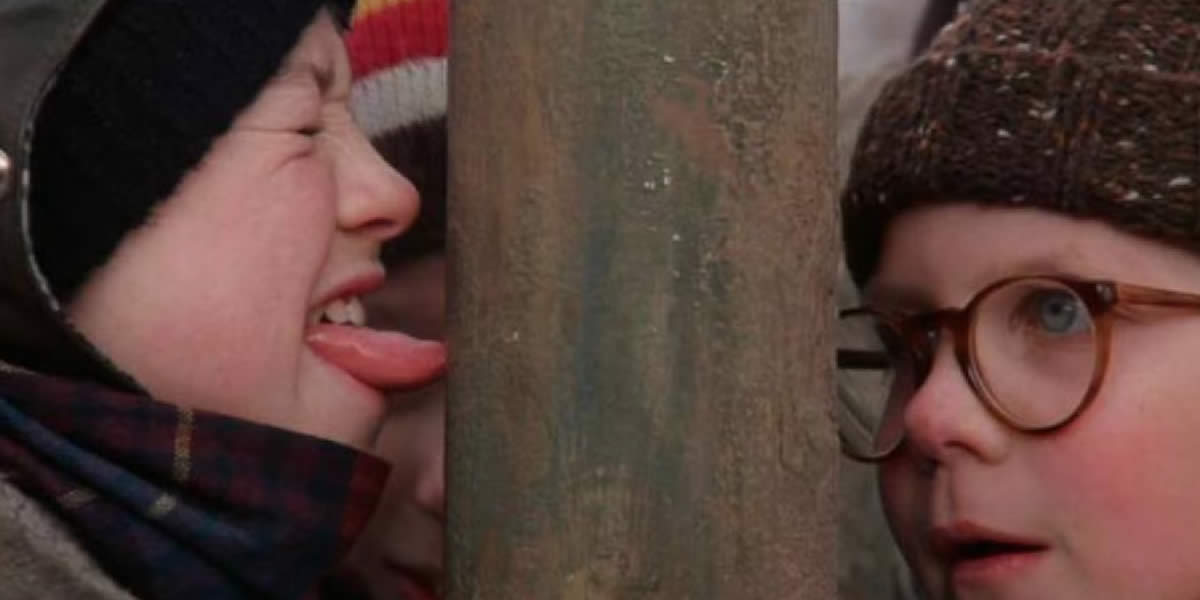
That shift would prove particularly important for A Christmas Story. The film’s seasonal structure made it suitable for repeat viewing, while its episodes could be remembered almost independently of the full plot. People could recall the tongue-on-the-flagpole dare, the bunny suit, the leg lamp, or the final Christmas morning without needing to reconstruct every scene in order.
In that sense, the film became a bridge between the past it depicted and the era in which it was released. It looked back at the 1940s while gradually becoming a memory of the 1980s for those who discovered it on television or home video.
Its popularity also reflects a wider attraction to period stories. The film offers a detailed world that feels different from modern life, but it avoids requiring audiences to understand every historical detail. The emotional stakes are immediate. A boy wants a gift. A father wants to enjoy his prize. A mother wants to keep the household functioning. Children want to impress their friends and avoid humiliation.
Those desires survive changes in technology and fashion. The movie’s nostalgia works because the past is not presented as an alien place. It is a recognizable version of everyday life, with different objects and habits but familiar human problems.
How A Christmas Story Became a Christmas Tradition
The movie’s long journey from theatrical release to seasonal institution is central to its reputation. Although it was released in November 1983, it did not immediately occupy the cultural position it holds today. Its audience and reputation expanded through later television exposure, home video, and repeated holiday screenings.
A major turning point came in 1997, when Turner Broadcasting began its annual 24-hour A Christmas Story marathon on TNT. The tradition later continued on TBS, placing the movie at the center of Christmas Eve and Christmas Day programming. The format made the film unusually available. A viewer could catch it at the beginning, return to it during a family gathering, or watch a favorite scene while moving through the day’s routines.
This kind of repetition creates a different relationship with a movie. Instead of being a story watched once and then remembered, it becomes a recurring seasonal presence. Its scenes begin to function like familiar decorations. The viewer knows what is coming, and that knowledge is part of the pleasure.
The marathon also gave the film a shared cultural rhythm. Families could encounter it in different rooms and at different times, while viewers who grew up with the broadcasts could carry the tradition into adulthood. The movie became associated not only with its own Christmas setting but also with the real-world routines of holiday viewing.
Its induction into the National Film Registry in 2012 further affirmed its place in American cultural history. The recognition was not simply a reward for popularity. The Registry considers films significant for their cultural, historical, or aesthetic contributions, and A Christmas Story offers a detailed portrait of a particular kind of American childhood.
The movie’s continued visibility has also inspired a market for memorabilia, visits to the Cleveland house used in filming, stage adaptations, and further screen stories. These extensions are evidence of the film’s commercial afterlife, but they also show how deeply its images have entered popular culture.
There is something fitting about this transformation. Ralphie’s Christmas wish is intensely personal, yet the film built a shared ritual around it. A story about one boy’s attempt to get the right gift became a movie that families return to as part of their own holiday traditions.
Why A Christmas Story Remains the Most Nostalgic 80s Holiday Movie
Calling A Christmas Story the most nostalgic holiday movie of the 1980s is necessarily a judgment, not an objective ranking. Other films offer grand fantasy, sentimental reunions, supernatural adventure, or broad comedy. What distinguishes this one is the way it treats ordinary childhood experiences as the raw material of holiday memory.
Its Christmas is not flawless. The house is noisy, the weather is unpleasant, the children get into trouble, and the adults are frequently unreasonable. The gifts do not always please their recipients. The family has to negotiate disappointment, embarrassment, and competing ideas about what makes a holiday successful.
That is why the film’s nostalgia feels earned. It does not ask viewers to believe that everything was better in the past. Instead, it shows how the past becomes meaningful through details that once seemed unimportant. A coat, a department store, a particular toy, or an argument at the dinner table can remain vivid long after the larger circumstances have faded.
The movie also understands the difference between a child’s memory and an adult’s understanding. Ralphie experiences the world in a series of urgent dramas. The adult narrator can see the comedy in those experiences without denying their importance. The boy’s problems may look small to an adult, but they are not small to the person living through them.
That balance allows the film to be funny without becoming cruel and affectionate without becoming sentimental. Its characters are allowed to be difficult. Its family is allowed to be imperfect. Christmas does not magically improve everyone, but it gives them a shared setting in which their habits and relationships become especially visible.
The film’s visual details have become part of the American holiday imagination, from the glowing leg lamp to the pink bunny suit and the department store Santa. Yet the strongest memory it leaves is less about any single prop than about the atmosphere surrounding them: winter light, crowded rooms, family rituals, and the intense belief that one Christmas morning might deliver something extraordinary.
More than four decades after its release, A Christmas Story remains a seasonal favorite because it understands that nostalgia is not simply longing for a lost era. It is a way of making sense of the ordinary moments that stay with us. The film looks back to the 1940s through the lens of an adult’s memory, became a recurring part of Christmas viewing in the 1980s and beyond, and now belongs to several generations of holiday tradition.
Ralphie eventually gets the gift he has wanted so desperately. The satisfaction of that moment is real, but it is not the only thing that makes the movie last. What remains is the world around the wish: the family that frustrates him, the friends who dare him, the adults who misunderstand him, and the small domestic dramas that turn an ordinary winter into a story worth telling.
That is the secret of A Christmas Story. It makes a particular Christmas feel personal, then leaves room for viewers to recognize their own. The details belong to Ralphie Parker, but the memories the film awakens belong to everyone who has ever waited for Christmas morning.