John Candy’s lovable misfit, John Hughes’s suburban storytelling, and a family in need of an unlikely hero made Uncle Buck a comedy with a surprisingly enduring heart.
There is something immediately suspicious about Buck Russell’s arrival. His car announces itself with a mechanical racket, his clothes suggest that getting dressed was never going to be the day’s main achievement, and his approach to responsibility seems to involve putting it off until somebody makes him stop. He is not the relative you would choose to look after your children in an emergency. He is, however, the relative you might remember for the rest of your life.
That contradiction is the engine of Uncle Buck, John Hughes’s 1989 comedy starring John Candy as an unpolished bachelor who suddenly finds himself caring for his brother’s three children. When a family crisis takes their parents out of town, Buck is called into service despite a reputation for unreliability. The arrangement is supposed to be temporary. Almost immediately, it becomes a test of patience, judgment, and the meaning of being part of a family.
Released on August 16, 1989, Uncle Buck arrived near the end of a decade in which Hughes had become one of Hollywood’s most recognizable interpreters of American adolescence and suburban life. His films understood that the ordinary places where people lived, went to school, and argued with their parents could contain enormous emotional stakes. A family kitchen could become a battlefield. A school administrator could seem like a tyrant. An awkward conversation between generations could be both painful and funny.
With Uncle Buck, Hughes shifted the perspective. Instead of placing a teenager at the center of the story, he gave the leading role to an adult who had never entirely grown up. Candy’s performance makes that premise work. Buck is irresponsible enough to generate chaos, but kind enough to recognize when somebody needs protecting. His instincts are frequently questionable, yet his heart is usually in the right place.
More than three decades later, Uncle Buck still works because its comedy is rooted in recognizable human behavior. The jokes are broad, the characters occasionally exaggerated, and the situations sometimes improbable. Beneath the cigar smoke, the enormous pancake, and the unruly family car, though, lies a simple question: what happens when somebody who has never quite learned to take care of himself discovers that other people are counting on him?
Uncle Buck Captured the Unruly Side of 1980s Family Life
By the late 1980s, the American family comedy occupied a familiar place in movie theaters. Audiences knew the setting: a comfortable suburban house, children navigating school and friendship, parents juggling work and domestic obligations, and relatives whose arrival threatened to disturb the household’s carefully maintained routine.
Hughes knew the landscape intimately. His films often used the Chicago area and its suburbs not simply as backgrounds but as places that shaped their characters. The streets, schools, kitchens, and family rooms felt lived in. These were communities where appearances mattered, where adults worried about their children’s futures, and where young people could feel trapped by rules they had not chosen.
Uncle Buck begins with an ordinary family arrangement under pressure. Bob and Cindy Russell have three children, but their eldest daughter, Tia, already resents the responsibilities and restrictions of family life. She is old enough to question her parents’ authority and young enough to feel that nearly every decision they make is an insult directed at her. Her younger siblings, Miles and Maizy, have their own needs, but Tia is the one whose frustration gives the household its immediate tension.
When a family emergency requires Bob and Cindy to leave town, they need somebody to look after the children. Their options are limited, and Buck is available. The decision is less an enthusiastic vote of confidence than a reluctant acknowledgment that the family has run out of alternatives.
That premise gave Hughes a way to explore the familiar territory of the 1980s family movie without relying on a perfectly responsible adult to keep everything under control. Buck is a disruptive presence. He does not fit the household’s expectations, and he has little patience for the polite rituals through which adults signal respectability.
His car is a noisy embarrassment. His habits are questionable. His employment prospects are uncertain. He is the kind of man a conventional family might describe as a bad influence, especially when the children begin to enjoy his company.
But that is precisely where the film finds its comic energy. The household does not need another authority figure who repeats the rules. It needs somebody who can see the people living under those rules.
The late 1980s were often represented on screen through polished consumer goods, fashionable clothes, big houses, and carefully managed family appearances. Uncle Buck acknowledges that world but is more interested in what happens when its surfaces crack. The Russell home may be orderly, but its relationships are not. Buck’s arrival makes the disorder visible.
John Candy Made Uncle Buck More Than a Lovable Slob
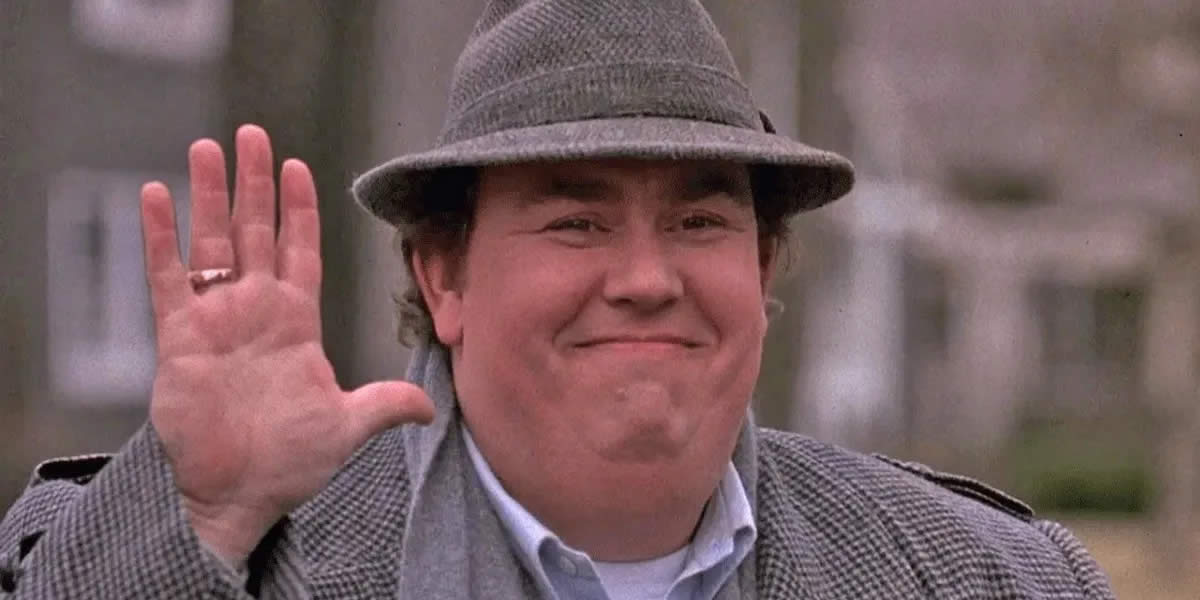
The most obvious reason Uncle Buck remains enjoyable is John Candy. A less capable performer might have turned Buck into a collection of crude habits and oversized reactions. Candy gives those traits a human center.
Candy had built his screen persona around a combination of physical comedy, emotional openness, and an ability to make flawed characters sympathetic. He could be loud without seeming cruel, foolish without seeming stupid, and sentimental without losing the joke. His size was part of his screen presence, but his greatest strength was the impression that a generous person was visible beneath all the bluster.
Buck is hardly a model of maturity. He smokes cigars, struggles with steady employment, and has a romantic relationship with Chanice Kobolowski, played by Amy Madigan, that suffers from his inability to make reliable commitments. He appears to have arranged his life around avoiding the obligations that most adults eventually accept.
Candy does not disguise these shortcomings. Instead, he plays them with an ease that allows the audience to laugh at Buck without writing him off. His expressions often reveal a moment of uncertainty beneath his confidence. When a situation goes wrong, he looks like a man improvising his way through a problem he should probably have anticipated.
That quality makes Buck believable in a way that a more conventionally heroic character might not be. He does not become responsible overnight. He makes mistakes, misjudges people, and relies on instinct where a little planning would help. His development comes through the gradual discovery that looking after children is not simply a matter of keeping them fed and preventing accidents. It means paying attention.
Candy’s performance also gives the film a particular warmth. Buck’s affection is not expressed through elaborate speeches. It emerges through small acts of loyalty, the willingness to stand up to a bully, or the recognition that a child who seems difficult may have a reason for behaving that way.
The movie understands that some adults are better at offering help than explaining themselves. Buck is one of them. He may not know how to present himself as a responsible guardian, but when a child is threatened or humiliated, his priorities become clear.
The distinction is important. The film never needs to pretend that Buck has suddenly become an ideal adult. It asks whether a person can be genuinely caring while remaining rough around the edges. Candy’s answer, delivered through comic timing and an expressive face, is an emphatic yes.
John Hughes Turned Suburban Discomfort Into Comedy
Hughes had already established a distinctive relationship with American adolescence through films including Sixteen Candles, The Breakfast Club, and Ferris Bueller’s Day Off. He understood that embarrassment could feel enormous when experienced by a teenager, even if an adult watching from the outside regarded the problem as trivial.
In Uncle Buck, he carries that understanding into the relationship between children and grown-ups. The film’s humor often comes from a clash between the language adults use to describe a situation and the way a child actually experiences it.
Parents may think they are being practical. Children may experience their decisions as indifference. A school official may believe strict discipline is necessary. A child who is being singled out may see only an adult using power to make somebody feel small.
Buck is not an especially articulate philosopher, but he recognizes these imbalances. He is suspicious of authority when it becomes self-important, and he is particularly impatient with adults who confuse obedience with good character.
That instinct leads to some of the movie’s most satisfying confrontations. When Buck encounters people who treat children harshly, he does not automatically defer to their position. He evaluates what they are doing and responds according to his own rough sense of fairness.
Hughes’s approach is deliberately comic. Buck’s methods are not always proportionate, and the film frequently pushes a confrontation beyond the point of realism. But the underlying emotional logic is familiar. Most people can remember an adult who seemed to enjoy having authority, or a moment when somebody finally stood up to a person who had been making life miserable.
The suburban setting sharpens the effect. Schools, family homes, and neighborhood streets are places where reputations can matter intensely. A teenager’s social standing may feel like a permanent verdict. A child’s small humiliation can become a defining memory. The adults in charge do not always understand how much power they hold.
Hughes had a talent for making these local conflicts feel important without turning every story into a solemn lesson. In Uncle Buck, a ridiculous situation can carry a serious emotional point, and a sincere moment can arrive just after a joke. The shifts feel natural because people themselves are rarely consistent. They laugh while uncomfortable, act foolish when nervous, and sometimes discover their best qualities in the middle of a mess.
The Children Give Uncle Buck Its Emotional Center
Buck may be the title character, but the children are essential to the film’s lasting appeal. Each has a different relationship with the adult world, and those differences prevent the story from becoming a simple celebration of one irresponsible man.
Tia, played by Jean Louisa Kelly, is the most openly hostile toward Buck. She is a teenager, and she wants to be treated as somebody whose opinions matter. Her resentment toward her parents is tied to a broader sense of displacement and frustration. The family’s move from Indianapolis to the Chicago suburbs has disrupted her life, while the expectations placed on her at home leave her feeling misunderstood.
Buck initially seems like another problem she has not chosen. He is embarrassing, unpredictable, and completely unlike the adults whose approval she is accustomed to seeking or resisting. She has little reason to trust him, and the film does not pretend otherwise.
Their relationship works because it is not instantly affectionate. Tia sees his weaknesses clearly, and Buck has to prove that his lack of conventional respectability does not mean he is indifferent to her. The film’s emotional progress depends on that distinction.
Miles, played by Macaulay Culkin, responds to Buck with a different kind of curiosity. At the time, Culkin was a young performer at the beginning of his film career. His understated delivery gives Miles a sharp, observant quality. He often seems to be studying the adults around him, waiting to see whether their behavior will make sense.
Culkin’s comic timing is especially effective beside Candy’s expansive physical performance. Candy can fill a room with movement and sound; Culkin can make a joke land with a glance or a matter-of-fact remark. The contrast gives their scenes a rhythm that neither actor could produce alone.
The film also makes room for Maizy, the youngest child, played by Gaby Hoffmann. Her place in the family is different from Tia’s adolescent resistance and Miles’s knowing curiosity. She helps establish the practical reality of Buck’s assignment: he is not simply negotiating a battle of wills with one difficult teenager. He has three children to keep safe, and each requires a different kind of attention.
That variety gives the story its emotional foundation. Children are not interchangeable obstacles in an adult’s journey toward maturity. They have distinct fears, temperaments, and ways of interpreting what is happening around them.
Buck’s success as a caretaker depends on learning to respond to those differences. He does not need to become a polished parent. He needs to recognize that the children are people, not merely responsibilities imposed on him.
The Film’s Biggest Laughs Come From Everyday Chaos
The comedy in Uncle Buck is memorable partly because it comes from objects and situations that could plausibly exist in an ordinary home. Hughes does not need an elaborate fantasy world. A car, a kitchen, a school office, or a conversation between relatives can provide all the raw material the film needs.
Buck’s battered automobile establishes his character before he has to explain himself. It is noisy, unwieldy, and conspicuously out of place beside the tidy expectations of suburban life. It announces that its owner operates according to a different standard of normal.
His enormous pancake is another example of the film’s approach to humor. A routine breakfast task becomes a demonstration of Buck’s exaggerated scale, his lack of conventional domestic technique, and his ability to turn a mundane activity into a spectacle. The joke is visual, but it also tells us something about the man making breakfast. He may not understand how to do things the approved way, yet he is perfectly willing to try.
The now-famous question about whether the house has a toilet plunger is similarly effective because it begins with an ordinary domestic concern and delivers it with Buck’s characteristic bluntness. It is an awkward moment, but Candy plays it without embarrassment, making his lack of social polish part of the joke.
These scenes work because they are not detached from the characters. Buck’s comedy arises from the way he moves through the world. He does not suddenly become a different person whenever the film needs a laugh. His habits, his body language, and his unfiltered speech continually create friction with the people around him.
The film also benefits from its use of silence and contrast. Candy’s physicality can be broad, but he often leaves room for a quieter response from another character. A pause, an incredulous look, or a child calmly pointing out the absurdity of an adult’s behavior can be as funny as a large comic set piece.
That balance matters when revisiting an 80s comedy. Some period humor depends heavily on references or social assumptions that have become dated. Uncle Buck has its share of material that reflects the attitudes and conventions of its era, but its best jokes are built on recognizable human weaknesses: vanity, awkwardness, impatience, and the conviction that one’s own behavior is perfectly reasonable.
The humor is not always subtle, but it is usually connected to something real. That is why the comedy still has room to breathe.
Uncle Buck Shows the Softer Side of John Hughes
For all its loud entrances and outrageous confrontations, Uncle Buck is ultimately a story about people learning to recognize one another. Its emotional stakes are modest by design. There is no world to save, no mystery to solve, and no grand public achievement waiting at the end. A family needs help, and a man who has spent years avoiding responsibility discovers that he may be capable of giving it.
Hughes had a gift for presenting family life as a mixture of affection and irritation. People who love one another can still be thoughtless. Parents can be well intentioned and unavailable. Teenagers can be unfair while also being genuinely hurt. Adults can make a mess of their own lives and still possess qualities worth admiring.
Buck’s relationship with Chanice, played by Madigan, reinforces this idea. She wants him to become more dependable, especially when it comes to work and the future they might share. Her frustration is understandable. Buck is charming, but charm does not pay bills or make promises meaningful.
The film does not simply dismiss Chanice’s concerns so that Buck can remain a lovable rogue. His shortcomings have consequences for the people closest to him. To become more than a temporary babysitter, he must begin to understand that his choices affect others.
At the same time, Hughes avoids making the character’s growth feel like a conversion into suburban respectability. Buck does not have to become a different species of man. The film’s idea of maturity is more practical: show up when people need you, take their problems seriously, and stop treating every obligation as an attack on your freedom.
That is a gentler message than the comedy initially suggests. Buck is not rewarded simply for being unconventional. He earns affection because he eventually puts his unconventional instincts to work on behalf of other people.
The film’s emotional turns are most effective when they remain grounded in this simple idea. A person can be a poor example in some parts of life and a reassuring presence in others. The fact that somebody is imperfect does not mean they are incapable of doing good.
For viewers who remember the film from childhood, this may be part of its appeal. The adults in Uncle Buck are not uniformly wise or dependable, and the children are not merely waiting to be taught lessons. The story makes room for the possibility that people can learn from one another across generations.
How Uncle Buck Helped Shape the Family Comedy of the 1990s
Released in 1989, Uncle Buck belongs to the final stretch of the decade that helped establish Hughes as a major force in American comedy. Its influence is especially interesting when considered alongside the family films that followed.
One of the most visible connections is Macaulay Culkin’s later starring role in Home Alone, released in 1990 and directed by Chris Columbus. Hughes wrote and produced that film. Culkin’s performance in Uncle Buck helped demonstrate the young actor’s ability to deliver dry, assured comedy opposite an adult performer with a strong screen presence. The pairing offered a glimpse of what he could do when a film trusted a child to carry a joke rather than simply react to it.
The relationship between the films is also visible in their treatment of domestic space. In Uncle Buck, a family home becomes a place where an unexpected caretaker must negotiate a series of practical and emotional challenges. In Home Alone, a child left behind turns the home into a setting for elaborate comic defense. The films are not identical, but both find comedy in the gap between adult assumptions and children’s capabilities.
That connection should not overshadow what makes Uncle Buck distinctive. Its center is an adult whose competence is in doubt, rather than a child whose ingenuity surprises everyone. Buck’s transformation is less about proving that he can master a series of tasks than discovering that he is willing to be responsible for other people.
The film also helped reinforce Candy’s standing as a performer who could move between broad comedy and sincere emotion. His earlier work in films such as Splash and Planes, Trains and Automobiles had already demonstrated that range. Uncle Buck gave him another character whose comic failures could coexist with genuine decency.
The film’s box-office success helped secure its place in the late-1980s comedy landscape. It became a familiar title in the larger body of Hughes’s work, alongside films about teenagers, friendships, and family expectations. Its subsequent television exposure and home-video life also made it accessible beyond its original theatrical audience.
Its legacy is not that every later family comedy copied its formula. Rather, Uncle Buck remains a clear example of a durable approach to the genre: build a funny situation around characters with recognizable emotional needs, and let the comedy reveal those needs instead of distracting from them.
Why Uncle Buck Still Delivers Laughs Today
Revisiting Uncle Buck now means encountering a particular version of American life. The film’s clothes, cars, school routines, and suburban interiors carry the texture of 1989. The world is less connected than the one contemporary families inhabit. There are no smartphones to settle an argument or summon help instantly. People must deal with one another in the room, on the telephone, or across a kitchen table.
Those details provide period atmosphere, but they are not the whole reason the film endures. Nostalgia can make an old comedy pleasant to revisit, yet nostalgia alone cannot sustain a hundred minutes of entertainment. The stronger connection comes from the characters’ problems, which remain recognizable even as the surrounding culture changes.
Families still face emergencies that disrupt daily routines. Teenagers still resent adults who do not understand them. Children still test the boundaries of authority, and adults still discover that good intentions are not enough to make them good caretakers. Relatives still arrive with habits that unsettle an orderly household, sometimes bringing exactly the kind of help nobody knew how to ask for.
Buck’s appeal is not that his behavior should be copied. His carelessness creates real problems, and the film is clear that responsibility requires more than a generous personality. His appeal is that he does not need to look respectable before he can be useful. He is allowed to be ridiculous and still become somebody the children can trust.
Candy makes that balance possible. He can play Buck’s foolishness for a laugh without making the character seem hollow. When the story turns serious, the warmth has already been established. We have seen enough of Buck’s awkwardness and generosity to believe that the same man who makes a spectacle of breakfast might also stand up for a child who has been treated unfairly.
Hughes, meanwhile, gives the comedy room to be about more than its central character. Tia’s resentment, Miles’s dry observations, Maizy’s younger perspective, and Chanice’s understandable frustration all help create a world in which Buck’s behavior has consequences. The family does not exist merely to admire him. They challenge him, resist him, and gradually discover what he can offer.
The movie also resists the temptation to define maturity as the end of fun. Buck’s transformation is not a demand that everyone become orderly, conventional, or endlessly serious. It is a recognition that freedom and responsibility need not be opposites. Being there for somebody else can give a direction to qualities that once seemed merely disruptive.
That idea remains appealing because it is neither complicated nor easy. People do not always become responsible through a single dramatic revelation. Sometimes they change because circumstances force them to pay attention. Sometimes they discover their capacity for kindness while trying to manage a problem they never expected to face.
Uncle Buck delivers its message with a noisy car, a mountain of pancake batter, some uncomfortable conversations, and John Candy at his most endearing. Its humor may be unmistakably rooted in the 1980s, but its affection for flawed people belongs to no particular decade.
In the end, Buck Russell is memorable not because he becomes the perfect uncle, but because he learns to be present when it matters. He remains awkward, unconventional, and occasionally exasperating. The difference is that the people around him can finally count on him.
That is a more satisfying ending than a simple lesson about growing up. It suggests that becoming a better person does not require erasing everything that makes you different. Sometimes it means recognizing which parts of yourself are worth keeping, then finding a way to use them for somebody else’s good.
And that is why Uncle Buck still delivers laughs today. Beneath its wonderfully untidy comedy is a generous belief that people can surprise one another, that families do not have to be perfect to hold together, and that the least likely person in the room may turn out to be exactly the person everybody needs.