Talking Heads turned everyday American eccentricity into a colorful pop spectacle with Wild Wild Life, a 1986 hit that captured the humor, energy, and restless spirit of the 80s.
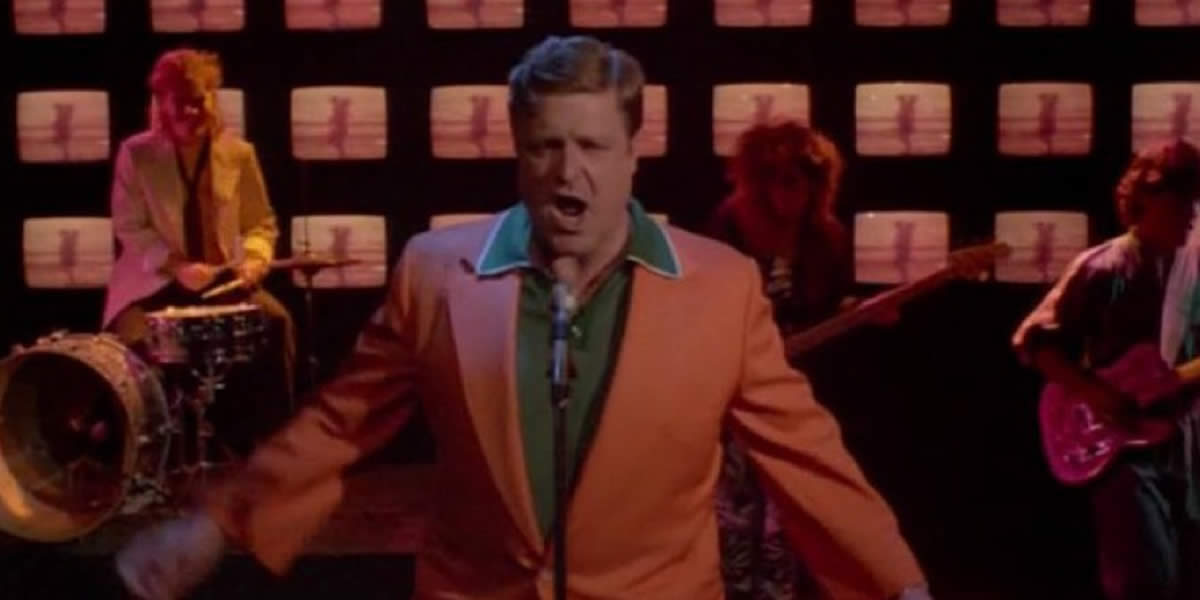
Picture a nightclub where nobody seems particularly interested in behaving normally. A man steps forward to sing with exaggerated confidence. Another character takes over, then another, each bringing a different look, attitude, or peculiar performance to the room. Behind the commotion, a bright, infectious rhythm keeps everything moving. The scene feels part party, part social experiment, and entirely entertaining.
That was the peculiar charm of Talking Heads’ Wild Wild Life, a song that found the extraordinary hiding inside the ordinary. Released in 1986, it brought the band’s art-school sensibility and nervous intelligence into a playful, accessible pop setting. It was catchy enough for the radio, strange enough to remain unmistakably Talking Heads, and visually inventive enough to become one of the memorable music videos of the decade.
Calling Wild Wild Life an anthem of the 80s does not mean it spoke for every listener or captured the decade in a single chorus. The song was not a protest march, a power ballad, or a declaration of youthful rebellion. Its appeal was subtler. It celebrated the odd characters, competing ambitions, commercial spectacles, and everyday performances that made modern American life feel like a show that never quite ended.
The song also arrived at an important moment for Talking Heads. After building a reputation through angular rhythms, art-rock experimentation, and David Byrne’s distinctly off-center view of the world, the band had become an established presence in popular music. Wild Wild Life showed that its members could make a buoyant, crowd-pleasing single without sanding away the quirks that made them distinctive.
Its connection to the film True Stories, Byrne’s 1986 portrait of an imagined Texas town, made the song even more revealing. In that setting, ordinary people become performers simply by being themselves. The result is a comic, affectionate look at American culture, and a fitting musical snapshot of an era when television, advertising, fashion, and MTV increasingly turned identity into a public spectacle.
Talking Heads Found the Strange Side of Everyday American Life
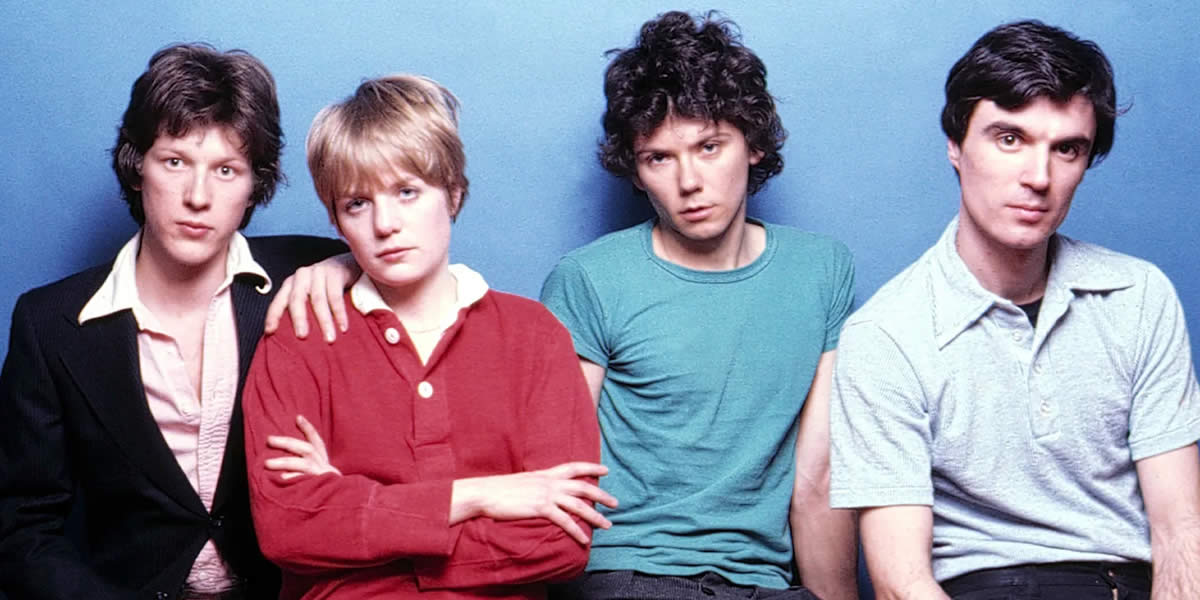
By the middle of the 1980s, Talking Heads had traveled a considerable distance from the downtown New York art scene that helped shape their early work. The band, formed by David Byrne, Tina Weymouth, Chris Frantz, and Jerry Harrison, had developed a sound that combined rock instrumentation with unusual rhythmic patterns, clipped guitar parts, nervous vocal delivery, and an appetite for musical ideas from beyond conventional American rock.
Their records did not always behave like conventional pop albums. Songs could feel like overheard conversations, private anxieties turned into dance music, or observations delivered by a narrator who seemed both fascinated by the world and slightly suspicious of it. Byrne’s voice was central to that effect. He could sound sincere and satirical at once, as though he were reporting something remarkable while quietly wondering whether anyone else had noticed how strange it was.
The band’s 1983 album Speaking in Tongues and the concert film Stop Making Sense helped broaden its audience. The latter, directed by Jonathan Demme and released in 1984, presented Talking Heads as a disciplined, inventive live act, building a performance from a sparse beginning into a full stage production. Their music could be cerebral, but it was also physical. The rhythms made people move before they had time to decide what the lyrics meant.
That combination mattered in an era when pop music was increasingly associated with spectacle. Music videos were becoming essential promotional tools, and the most successful artists often had to communicate through image as much as sound. Talking Heads were well suited to this changing landscape, not because they chased glamour, but because they understood how revealing performance could be.
Wild Wild Life took that insight into a more openly comic direction. Rather than constructing a heroic persona or presenting a single glamorous fantasy, it opened the door to a crowd of personalities. The song’s world was crowded, restless, and full of people trying on identities. Its humor came from recognizing that the spectacle of ordinary life could be every bit as entertaining as a carefully manufactured star.
How Wild Wild Life Became the Sound of True Stories
Wild Wild Life emerged from True Stories, Talking Heads’ seventh studio album, released in 1986. The record was closely connected to Byrne’s film of the same name, which he directed and in which the band appeared. Rather than functioning as a conventional soundtrack, the album presented Talking Heads’ own studio versions of songs associated with the film’s imagined community.
The distinction is important. The film does not simply follow a rock band through a series of performances. It observes a collection of residents in a fictional Texas town preparing for a community celebration. Their routines, desires, insecurities, and ambitions become the real subject. Some characters seem entirely comfortable with their peculiarities; others are searching for a way to be noticed, loved, or understood.
Byrne’s approach to the project grew out of an interest in ordinary people and the stories they tell about themselves. The film’s characters are not presented as anonymous background figures. They have individual styles and private ambitions, and they occupy a world in which the commonplace can become strange simply by being examined closely.
Wild Wild Life fits that environment naturally. It is a song about the spectacle of living, with all the exaggeration, vanity, confusion, and pleasure that can accompany it. Its energy feels less like an escape from daily life than a decision to look at daily life from a different angle.
The album’s release also came at a time when Talking Heads were balancing their experimental instincts with a growing mainstream audience. The group had already demonstrated that it could produce commercially successful music without abandoning its unconventional character. Wild Wild Life pushed that balance toward bright, direct fun. It was a song listeners could enjoy immediately, even if they had never seen the film or spent time thinking about Byrne’s broader interests.
The single became one of the band’s most successful American pop releases, reaching the Top 40 on the Billboard Hot 100. It also earned a strong international response, although its chart performance varied by country. In Britain, it peaked at number 43 on the Official Singles Chart.
That commercial reach gave the song a life beyond the film that inspired it. For many listeners, Wild Wild Life was first a memorable pop single and an entertaining video, rather than an introduction to Byrne’s cinematic portrait of American communities. Yet the song retained something of the film’s central idea: people are fascinating partly because they refuse to fit neatly into a single category.
The Sound of Wild Wild Life: Bright, Restless, and Unmistakably Talking Heads
The song’s appeal begins with its buoyant musical movement. Its arrangement is brisk and compact, with a rhythmic drive that feels built for repeated listening. The groove is playful without becoming weightless, and the performance has a loose, animated quality that keeps the track from sounding overly polished.
Talking Heads had long been interested in the relationship between rhythm and behavior. In earlier work, repetition could create tension or suggest an obsession. Here, rhythmic insistence becomes an invitation. The music moves forward with a sense of cheerful impatience, giving the song a momentum that suits its collection of unusual personalities.
The guitar work helps establish that motion. Rather than dominating the arrangement with a heavy rock riff, the instrumental parts contribute to an interlocking pattern. The effect is crisp and nimble, leaving room for the vocal and the song’s repeated refrain to take center stage. The band sounds coordinated but never stiff, like a group of musicians who understand precisely how much space a good pop song needs.
Byrne’s vocal performance is another essential ingredient. His delivery does not rely on the grand gestures of a traditional rock frontman. Instead, he sounds observant and slightly bemused, as though he has found himself in a room full of people whose behavior is both ridiculous and irresistible. That distance creates the song’s comic perspective. He is part of the spectacle, but he is also watching it.
The refrain is simple enough to lodge in the listener’s memory, while the surrounding arrangement keeps the track lively. That balance is one reason the song works so well on radio. A listener does not need to understand the band’s history, identify its influences, or interpret every lyric to enjoy the rhythm. The record communicates through movement and mood before any deeper meaning enters the picture.
But the music is not generic party pop. Its small irregularities, clipped phrasing, and sense of amused observation distinguish it from the decade’s more polished dance productions. Talking Heads could make an accessible song while preserving a feeling that something unexpected might happen at any moment.
That quality is central to the song’s longevity. It sounds cheerful, but not bland. It is eccentric, but not inaccessible. And its energy comes from the interaction between the musicians rather than from an oversized production designed to overwhelm the listener.
Wild Wild Life and the MTV Era
In 1986, a successful single could travel through more than radio rotation and record-store displays. MTV had helped establish the music video as a defining feature of pop culture, encouraging artists to create visual worlds that could make a song more memorable. A strong video might supply the image listeners carried into conversations, television appearances, and later recollections of the music itself.
Wild Wild Life was especially suited to that environment because its central idea was already theatrical. The video, drawn largely from a nightclub sequence in True Stories and supplemented with additional material, presented a parade of characters taking turns performing the song. The room became a miniature stage for personalities who seemed to have arrived from different corners of American entertainment.
Instead of focusing exclusively on the band, the video let the surrounding characters take over. People lip-synced, adopted exaggerated personas, and turned the nightclub into a succession of small acts. The approach made the video feel less like a conventional promotional clip and more like an event unfolding in front of the viewer.
The sequence also played with familiar pop images. Jerry Harrison appears in comic impersonations that evoke performers and popular screen personalities, while the video folds its references into a broader parade of theatrical behavior. The joke is not simply that people imitate celebrities. It is that popular culture gives people a vocabulary for presenting themselves, whether they are borrowing a star’s attitude, clothing, gestures, or confidence.
That was an especially apt subject for the 1980s. The decade’s visual culture was crowded with strong identities: brightly styled performers, movie stars, television personalities, advertising mascots, and public figures whose images circulated constantly. The rise of cable television and the growing importance of music videos helped make those images part of ordinary life. A person could encounter the same celebrity pose or commercial catchphrase repeatedly until it became a familiar part of the cultural landscape.
Talking Heads approached this world with humor rather than reverence. The video understands that performance can be entertaining even when it is awkward, exaggerated, or transparently borrowed. It also recognizes that people are not merely passive consumers of images. They imitate them, reshape them, and use them to invent versions of themselves.
The clip’s reception confirmed that its visual approach had worked. At the 1987 MTV Video Music Awards, Wild Wild Life won both Best Group Video and Best Video from a Film. Those awards reflected the way it connected a song, a film scene, and the emerging language of music television. The video did more than illustrate the track. It made the track’s central observation visible.
For viewers who encountered it on MTV, the nightclub became inseparable from the song’s identity. The crowded room, the changing faces, and the playful impersonations gave Wild Wild Life a visual memory as distinctive as its musical hook.
The 80s Obsession With Identity, Image, and Performance
The 1980s encouraged people to think carefully about how they presented themselves. Fashion offered a growing range of visible signals, from oversized jackets and sharply structured office wear to athletic clothing, dramatic hairstyles, and conspicuous accessories. Pop stars cultivated recognizable looks. Television commercials sold not only products but the idea that the right purchase could express a particular personality.
It would be too simple to say that everyone in the decade was obsessed with appearances. People dressed for work, school, family life, subculture, convenience, and personal taste, just as they did before and after the 1980s. But the decade’s media environment made image unusually prominent. A recognizable look could become part of a public identity, and the boundary between everyday life and performance often seemed thinner than before.
Wild Wild Life captures that atmosphere without turning into a lecture. Its characters do not share a single ideal of coolness. They arrive with different styles, different degrees of confidence, and different ideas about what makes a person interesting. The result is a comic democracy of oddity: nobody needs to be the most fashionable or the most polished to contribute to the spectacle.
That is one reason the song feels more generous than a straightforward satire of vanity. Byrne’s work often examines the peculiar ways people construct their lives, but observation does not always mean contempt. In True Stories, the residents’ eccentricities can be funny, yet their desires are recognizable. They want connection, attention, romance, success, or simply a chance to be seen.
The music video extends that sympathy. Its performers are exaggerated, but they are also allowed to enjoy themselves. Their acts may be ridiculous, yet the room gives them space. The nightclub becomes a place where ordinary people can briefly occupy the center of attention without needing to become famous outside its walls.
In that sense, Wild Wild Life offers a small counterpoint to the decade’s polished celebrity culture. It finds entertainment not only in the finished product but in the messy process of people trying to become someone. The song’s world is full of borrowed gestures and improvised identities, but those performances are part of what makes the crowd lively.
That observation remains relevant in a culture shaped by personal branding and constant visual communication. The tools have changed, but people still use images, clothing, humor, and performance to tell the world who they are, or who they would like to be. Wild Wild Life makes that process look absurd, enjoyable, and profoundly human.
David Byrne’s Comic Vision of America
David Byrne’s interest in American life has often involved looking at familiar places as if he were encountering them for the first time. In True Stories, that perspective turns a Texas town into a collection of small mysteries. Its residents are recognizable, but their habits and ambitions become surprising when the camera gives them close attention.
The film draws on the textures of ordinary commercial life: shopping, television, local entertainment, community events, and the routines that organize a town. These are not grand symbols of national identity. They are the details through which people experience a place. The humor comes from noticing how much personality and imagination can be packed into a seemingly ordinary setting.
Wild Wild Life gives this approach a musical form. Its nightclub scene brings the town’s colorful human variety into one room. Instead of a single star commanding the stage, the space fills with people who each seem to have their own idea of what a performance should be. Some gestures are recognizable as pop culture references; others are simply odd enough to attract attention.
The scene also reflects Byrne’s interest in the distance between public appearance and private reality. A performer can project confidence without necessarily possessing it. Someone who seems ridiculous to an observer may be expressing a genuine desire to be noticed. A familiar celebrity pose can become funny when an ordinary person adopts it, but the imitation also reveals how deeply popular images have entered everyday life.
The song does not resolve these contradictions. It does not need to. Its energy comes from the accumulation of personalities, not from a tidy moral about American society. The world it presents is a little chaotic, a little theatrical, and endlessly capable of producing another character who deserves a closer look.
This is where Talking Heads’ artistic instincts meet the pleasures of pop. The band could have turned the subject into a coolly detached experiment. Instead, the song and video give it a sense of communal fun. The people in the room are not merely specimens being observed. They are part of the entertainment, and the audience is invited to enjoy the show.
The result is a distinctly American kind of cultural portrait, rooted in the ordinary spaces where people gather and perform their identities. The nightclub could be anywhere in the imagined town, but its characters suggest a much wider landscape: the television screen, the shopping mall, the local bar, the living room where a music video plays after dinner.
Why Wild Wild Life Still Feels So Alive
Some songs become attached to a decade because their production announces a particular moment in music history. Others survive because their subject remains recognizable even when the surrounding sounds and fashions change. Wild Wild Life manages both.
Its sound carries the bright, agile character of mid-80s pop, but its humor does not depend on a specific hairstyle, outfit, or technological novelty. The song is about people, and people remain wonderfully difficult to categorize. Every generation produces performers, imitators, show-offs, shy observers, and people who discover that a little theatrical confidence can make an ordinary evening more interesting.
The video is equally durable because its visual premise is so direct. A room full of people takes turns performing. The sequence builds variety through faces, costumes, gestures, and shifts in attitude rather than relying on a complicated plot. It is easy to follow, but it rewards attention because each new performer changes the mood of the room.
Its awards at the 1987 MTV Video Music Awards helped establish its place in the era’s visual pop history. Yet the video remains more than a period artifact. It demonstrates how a music video can expand the meaning of a song by giving its ideas a physical setting. The song supplies the pulse; the room supplies the social world.
The track also represents an important side of Talking Heads’ legacy. The group is often remembered for its most overtly experimental work, for Byrne’s distinctive stage presence, and for the elaborate rhythms of songs such as “Once in a Lifetime.” But its ability to make unusual ideas inviting was just as important. The band could translate curiosity about human behavior into music that worked in a club, on the radio, or through a television speaker.
Wild Wild Life does not ask the listener to choose between intelligence and pleasure. Its rhythmic drive makes it enjoyable before its cultural observations come into focus. Once those observations emerge, they deepen the experience rather than interrupt it. The song can be a piece of lively pop entertainment and a sly portrait of the way people turn themselves into spectacles.
Its connection to True Stories adds another layer. The film’s imagined town is populated by people who are not necessarily famous, exceptional, or especially successful. They are interesting because they are specific. Byrne’s camera and the band’s music make room for those differences, suggesting that the everyday world contains enough material for a hundred performances.
That idea has aged well. Contemporary audiences live amid an even denser stream of public images, from short-form videos to carefully managed online identities. The mechanisms of visibility have changed, but the impulse to perform, imitate, entertain, and seek recognition is familiar. Wild Wild Life anticipated no particular platform or technology. It simply understood the human attraction to watching people present themselves.
The Enduring Appeal of Talking Heads’ Wild Wild Life
The title Wild Wild Life suggests an unruly world, but the song’s real subject is not chaos for its own sake. It is the abundance of personality that emerges when people are allowed to occupy the stage in their own ways. The song makes ordinary behavior feel eventful, turning a nightclub into a compact portrait of the decade’s public imagination.
In 1986, that portrait arrived through a particularly effective combination of music, film, and television. The song brought Talking Heads’ rhythmic precision into a buoyant pop setting. True Stories supplied a wider vision of American life, filled with characters whose ambitions and peculiarities resisted easy explanation. MTV gave the song a visual home where those ideas could play out in a succession of comic performances.
Together, those elements made Wild Wild Life more than a catchy single. It became a reminder that pop culture can reveal something about the society producing it, even when it is having fun. The song notices how people borrow images, adopt roles, and turn daily routines into performances, but it does not insist that they stop. It watches, listens, and lets the spectacle continue.
That is the quality that makes it such a fitting 80s anthem. Not because the decade was one continuous party, or because every American shared the same tastes, but because the song captures the era’s fascination with image, individuality, and entertainment. It finds a whole world of character in a crowded room and gives each person a moment in the light.
More than three decades later, the track still sounds invitingly restless. Its rhythm moves, its characters keep arriving, and its humor remains affectionate enough to welcome the listener into the room. The wildness is not simply out there in the world. It is in the strange, expressive, sometimes ridiculous ways people make themselves known.
And that is the lasting trick of Talking Heads’ Wild Wild Life: it turns the everyday spectacle of being human into irresistible pop.