From smoky arcades to living-room consoles, Double Dragon transformed street fighting into a cooperative adventure and helped define a generation of 80s gaming.
The arcade cabinet stood like a challenge. Its artwork promised trouble, its screen filled with rough-looking streets and dangerous-looking characters, and its controls offered a simple proposition: step forward, throw a punch, and see how long you can survive. Around it, quarters changed hands, friends negotiated whose turn came next, and the sounds of digital combat competed with the electronic noise of neighboring machines.
Then Double Dragon arrived, and fighting through that screen became something you could do with a friend.
Released by Technōs Japan in 1987, Double Dragon was more than another arcade game about knocking down enemies. It helped establish the side-scrolling beat-’em-up as one of the defining action genres of the late 1980s. Its appeal rested on an unusually satisfying combination of hand-to-hand combat, weapons, a journey through a hostile urban landscape, and two-player cooperation. Instead of remaining in one arena, players advanced through a scrolling world, overcoming gangs and increasingly formidable opponents as the adventure unfolded.
The premise was uncomplicated. Billy and Jimmy Lee were martial-arts-trained brothers fighting their way through a violent city to rescue Marian, who had been kidnapped by a criminal gang. Yet the game made that familiar story feel substantial through the act of playing it. Enemies approached from different directions, weapons could change the balance of a fight, and the brothers had to keep moving if they wanted to reach the end.
For children and teenagers who encountered it in arcades, Double Dragon offered a particular kind of fantasy. You were not merely controlling a character who could punch and kick. You were entering a world where progress came through persistence, quick reactions, and, ideally, teamwork. A friend could help clear a path, rescue you from a crowd, or complicate matters by competing for the same weapon.
The game also arrived at a moment when arcades remained important social spaces and home consoles were becoming central to family entertainment. Its success would carry the experience into living rooms, although the home versions could not always reproduce the original’s full capabilities. The Double Dragon name eventually spread across sequels, adaptations, and other media.
Its lasting significance is not that it invented every element of the beat-’em-up. Earlier games had already explored martial-arts combat and scrolling action. Rather, Double Dragon brought those elements together in a particularly influential form, making a journey through a hostile city feel like an adventure shared between players. In doing so, it helped establish the blueprint for a generation of games that followed.
Double Dragon Arrived at the Right Moment for Arcade Gaming
By the second half of the 1980s, arcades had become familiar gathering places in malls, shopping centers, restaurants, bowling alleys, and neighborhood businesses. A row of cabinets could turn an otherwise ordinary stop into an event. Players gathered around their favorites, studied the screens of more experienced visitors, and learned games through a combination of experimentation and observation.
Arcade games were designed around attention and immediacy. Their instructions had to be understood quickly, and their action had to look appealing from a distance. But the best games offered more than a brief distraction. They gave players reasons to return, improve, and spend another coin trying to get farther than they had before.
Double Dragon took advantage of that environment. Its central idea was easy to grasp even for someone who had never played a beat-’em-up. Two martial-arts heroes fought their way through successive groups of enemies. The screen moved forward as they advanced, and each new section brought fresh opposition. There was a clear objective, visible progress, and a constant sense that the next confrontation was just ahead.
The game was developed by Technōs Japan and released in 1987, with Taito involved in its international arcade distribution. It followed the company’s earlier game Nekketsu Kōha Kunio-kun, released outside Japan as Renegade. That earlier title had already explored street fighting in a scrolling environment. Double Dragon developed the idea further, expanding the sense of movement through a continuous world and making cooperative play central to the experience.
This was an important distinction. Fighting games could offer a contest between two opponents, but Double Dragon invited two people to stand on the same side. Each player controlled a brother, and both could advance through the same levels. The arcade cabinet therefore became a place for cooperation as well as competition.
The social experience mattered. A player who struggled alone could recruit a friend, and two players could work out their own informal strategy. One might keep an enemy occupied while the other attacked from the side. Both could crowd around a powerful opponent, or accidentally interfere with each other’s movements. Cooperation did not guarantee harmony, but it made the action feel shared.
The result was a game that suited the arcade’s public setting. People could watch a pair of players work through a level and understand the appeal without needing an explanation. The brothers moved through a recognizable sequence of challenges, and the outcome was visible to everyone standing nearby.
Double Dragon arrived when the arcade industry was already full of memorable characters and distinctive action games. Its achievement was to give a familiar kind of combat a stronger sense of progression and partnership. The street brawl became a journey, and the journey became an experience that was better with two people.
Billy and Jimmy Lee Turned Street Fighting Into a Shared Adventure
The story of Double Dragon begins with Marian’s kidnapping by the Black Warriors, a violent gang operating in a ruined urban landscape. Billy Lee sets out to rescue her, while his brother Jimmy joins him in the fight. The premise draws on familiar martial-arts and action-movie traditions: a dangerous organization, a kidnapped woman, skilled fighters, and a journey through hostile territory.
The narrative was straightforward by design. Arcade players did not need to memorize a complicated cast or follow lengthy dialogue. The objective was immediately understandable, and the action supplied most of the drama. Every advancing screen represented another step toward the rescue.
Still, the story gave the fighting a useful purpose. The players were not simply clearing an endless collection of enemies. They were moving toward a destination, and the different environments made the journey feel as if it had a beginning, middle, and end.
The game’s urban setting also contributed to its identity. Rather than placing the heroes in a tournament or a series of isolated martial-arts arenas, Double Dragon sent them through streets, industrial spaces, and enemy territory. Its city felt dangerous and unstable, a place where trouble could emerge from the edge of the screen at any moment.
That atmosphere belonged to a wider action tradition. Martial-arts films, urban crime stories, and post-apocalyptic entertainment had helped shape popular ideas about physical heroism. The game’s visual world also drew from influences associated with films such as Mad Max and the manga and anime series Fist of the North Star. These influences gave the setting a rough, exaggerated quality that suited the relentless combat.
The brothers themselves were less psychologically developed than movie characters, but their relationship mattered mechanically. The ability to play cooperatively was not an optional detail tacked onto a solo adventure. It was part of the concept that made the game distinctive.
For players, the brothers could become extensions of a real friendship. A pair might decide who would take the lead, which enemy to target first, or when to save a weapon for a tougher opponent. A successful run was something both players could share. So was a disastrous one.
The arcade version’s ending introduced a darker twist. In a single-player game, the player who reached the end rescued Marian. In two-player mode, the brothers were forced into a final confrontation with each other after defeating the gang. The survivor would claim Marian, turning the supposed partnership into a contest.
It was a surprising conclusion to a game built around cooperation. Players who had fought together for the entire adventure could suddenly find themselves competing for the final reward. That ending gave Double Dragon a memorable sting, even if its treatment of Marian reflected the conventions of action stories that often made a woman the prize motivating male heroes.
The twist also demonstrated how a simple arcade narrative could produce a strong emotional reaction. Players might have spent the entire game helping one another, only to discover that the last challenge was between them. The city had been conquered, but the friendship was not necessarily safe.
What Made Double Dragon’s Combat Feel Different
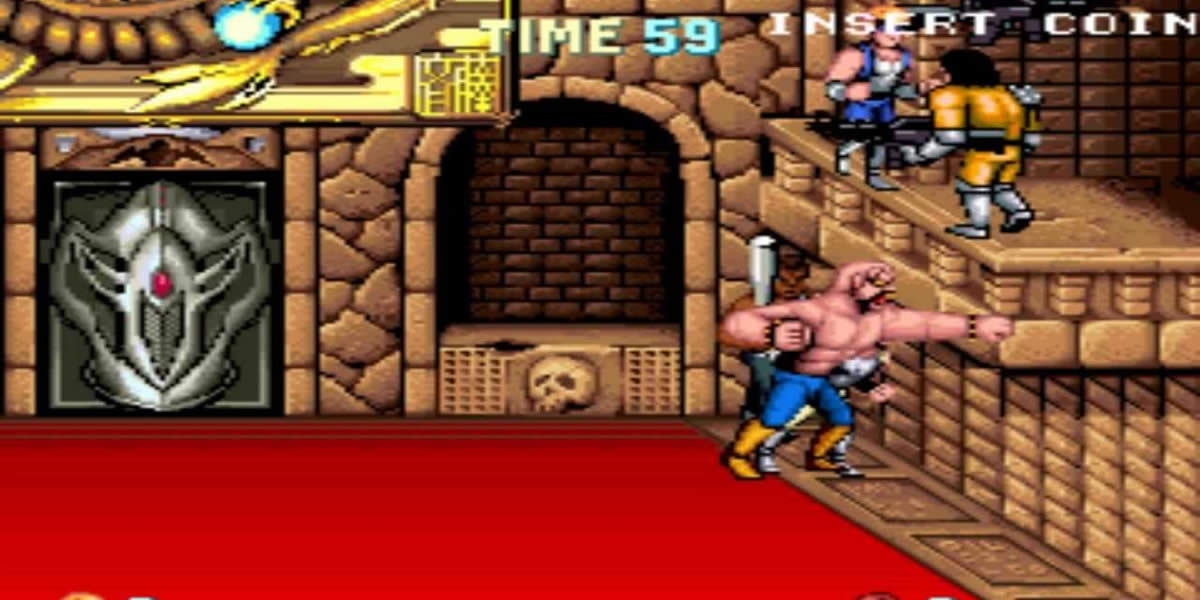
The most important part of Double Dragon was not the plot but the physical rhythm of its combat. The heroes could punch, kick, jump, grab opponents, and use a variety of attacks that made encounters feel more involved than a repeated button press.
At first, the controls were approachable. Move toward an enemy, attack, and react to whatever happens next. But the game became more interesting when several enemies appeared together. A player had to consider positioning, timing, and the possibility of being attacked from behind. Running straight into a crowd could be costly.
The scrolling environment also allowed players to move in more than one direction across the playfield. Characters could shift vertically as well as horizontally, making positioning an important part of combat. This gave fights a sense of space. An opponent was not always directly in front of the player, and the best approach could depend on where everyone stood.
Another major feature was the ability to use weapons taken from enemies or found in the environment. Clubs, bats, knives, and other objects could alter the balance of a fight. An enemy who had seemed dangerous at close range might become easier to handle after losing a weapon, while a player who picked up that weapon could gain a temporary advantage.
This feature made encounters less predictable. A weapon was not simply a visual detail; it could become a resource worth protecting. Players had to decide when to use it and whether they could keep it long enough to make a difference.
The weapons also gave the game a physical sense of improvisation. The heroes were martial artists, but they were not limited to formal techniques. They could turn the objects around them into tools for survival. The result felt less like a carefully controlled contest and more like a desperate brawl in which the environment itself became part of the action.
There was a price for the game’s ambition. The arcade version could slow down when many characters crowded the screen, a limitation associated with the hardware and the game’s demands. But the overall experience was compelling enough that its strengths overshadowed those technical rough edges for many players.
The important advance was the way the mechanics worked together. Scrolling movement gave combat direction. Multiple enemies created pressure. Weapons introduced tactical choices. Cooperative play gave the same encounters a social dimension. Each element made the others more meaningful.
Later beat-’em-ups would refine these ideas, but Double Dragon helped show how much could be done with a simple premise. Fighting through a city could be more than a sequence of identical encounters. It could become a steadily changing test of judgment, coordination, and endurance.
The Arcade Experience Made Double Dragon a Social Event
The arcade was not just a place where a game could be played. It was a place where playing became a public activity. People waited for turns, watched strangers attempt difficult sections, offered advice, and compared their own progress with what they saw on the screen.
Double Dragon was particularly well suited to that environment because its two-player mode made the social element visible. Two people stood side by side, each controlling a character, and their decisions affected the same fight. They could coordinate attacks, help one another through a difficult section, or discover that two players moving without a plan could create more confusion than one.
The shared cabinet also encouraged conversation. Players could debate which move worked best, explain a trick to someone new, or negotiate how to divide the available weapons. Someone waiting nearby could learn the game’s rhythm simply by watching.
There was also a practical tension built into arcade play. Each attempt required money, and the game did not promise that a player would reach the ending. Progress was purchased in small increments, and every failure carried a visible cost. That made success feel earned, particularly when a pair of players managed to advance farther than they had before.
The game could be demanding. Enemies could surround the brothers, and the player had to react quickly enough to avoid losing control of the fight. But difficulty was part of the appeal. A difficult section offered a clear challenge, and another attempt might produce a better result.
Playing with a friend changed the emotional character of that challenge. A solo player had only personal mistakes to consider. Two players could share responsibility, celebrate a good move, or blame one another for a poorly timed attack. The game’s cooperative structure made every victory a small group achievement.
That did not mean the experience was always harmonious. Players could accidentally hit or obstruct each other, and the final confrontation between the brothers could turn a cooperative run into a rivalry. Those moments were part of the game’s personality. It encouraged teamwork while leaving room for competition.
The physical arcade setting amplified these interactions. The cabinet’s controls, the visible screen, and the presence of other players made the game a performance as well as a private pastime. The action belonged to the person holding the joystick, but it also belonged to the friend standing beside them and the spectators gathered behind them.
This was one reason arcade hits could become shared cultural reference points. People who had never owned a console could still recognize a popular cabinet. Friends could talk about a difficult boss or a memorable ending without needing to own the game themselves. Double Dragon was not only something to play. It was something to gather around.

Double Dragon Helped Define the Beat-‘Em-Up Genre
The term “beat-’em-up” describes a style of action game in which players fight successive groups of opponents, usually through a scrolling environment. The genre had important predecessors, including Kung-Fu Master and Technōs Japan’s own Renegade. Double Dragon did not invent the basic idea of moving through a level while fighting enemies, but it helped establish a particularly influential version of it.
Its combination of cooperative play, varied attacks, weapons, and continuous progression gave other developers a model to study. The genre’s appeal was easy to understand: the player moved forward, faced a series of escalating threats, and gradually worked toward a larger goal. The mechanics were accessible, but mastering them required attention and practice.
This structure became a major feature of late-1980s and early-1990s arcade gaming. Other titles expanded on the formula with new settings, larger casts, different combat systems, and more elaborate cooperative mechanics. Games such as Final Fight and Golden Axe would become important examples of the genre’s growth, each offering its own approach to fighting through waves of enemies.
The influence was not limited to games that copied the Lee brothers’ martial-arts setting. The broader lesson was that a scrolling action game could sustain interest through a combination of progression and variety. New opponents, new environments, and new combat situations gave players reasons to keep advancing.
Two-player cooperation was particularly valuable. It turned a game that might otherwise have been a solitary test of reflexes into an activity built around shared decisions. Later beat-’em-ups often embraced that principle, allowing friends to work through an adventure together and making the arcade cabinet a natural gathering point.
The game’s success also helped establish the beat-’em-up as a recognizable commercial category. By the end of the decade, players could expect to find action games that placed them in the middle of a scrolling battle, with enemies approaching in groups and powerful opponents waiting at key moments. Double Dragon was one of the titles that made this structure feel like a proven formula rather than a one-off experiment.
Its importance is easiest to see in the games that followed. Developers did not need to reproduce Billy and Jimmy exactly to build on the ideas the game popularized. They could change the characters, the weapons, the setting, and the tone while retaining the central pleasure of advancing through a dangerous world with a partner.
That is how a successful game can influence a genre. It provides a recognizable structure that other creators can adapt, challenge, and improve. Double Dragon helped make the side-scrolling brawler one of the most recognizable forms of arcade action in its era.
From Arcade Cabinet to Nintendo: Double Dragon at Home
The arcade version was the original attraction, but the future of gaming was increasingly moving into the living room. By the late 1980s, the Nintendo Entertainment System had become a major part of home entertainment in North America. For players who wanted to revisit an arcade favorite without repeatedly feeding coins into a cabinet, a home release offered a different kind of access.
The NES version of Double Dragon arrived in North America in 1988. It carried the central premise into a format that could be played on a television, using a controller instead of a full arcade control panel. The change in setting was significant. What had been a public experience shared in a crowded room could now become a game played at home, perhaps with a sibling or friend sitting nearby.
However, the NES version was not simply the arcade game reproduced without compromise. The hardware had different capabilities, and the adaptation changed several aspects of the experience. Most notably, the original arcade game’s simultaneous two-player cooperation was not preserved in the same way. The NES version supported two players, but its main adventure used alternating turns rather than allowing both brothers to fight on screen together.
The home release also introduced its own progression and play mechanics. Players could develop their character’s fighting abilities by earning points, and the structure differed from the arcade original. These changes made the NES edition its own interpretation of the game rather than a perfect substitute for the cabinet.
For fans, this created a familiar problem in the early console era: the home version might carry the name, characters, and basic idea of an arcade hit while feeling noticeably different in practice. Arcade hardware was designed for a dedicated game, while a home console had to accommodate its own technical limits and design conventions.
Yet the conversion helped broaden the game’s audience. Someone who had discovered Double Dragon in an arcade could now own a version at home. Players could return to it without having to budget for each attempt, and the game could become part of a household’s collection rather than an occasional outing.
The NES release also helped the franchise build a presence beyond the original arcade audience. Further versions appeared on other platforms, and the series continued through sequels and adaptations. Each version reflected the capabilities and expectations of its system, making Double Dragon a useful example of how arcade games traveled through the changing landscape of 1980s and early-1990s gaming.
The move home changed the social atmosphere, too. In an arcade, cooperation meant sharing a cabinet with other people in a public space. At home, gaming could become part of a regular routine, woven into afternoons, weekends, and visits with friends. The console did not reproduce every part of the arcade experience, but it made the world of Double Dragon easier to revisit.
Double Dragon Became More Than a Single Arcade Hit
A successful arcade game could disappear when a new attraction arrived, but Double Dragon developed into a recognizable franchise. Its popularity supported sequels, home versions, and adaptations that carried the name into different corners of entertainment.
The arcade follow-up, Double Dragon II: The Revenge, arrived in 1988, continuing the series’ martial-arts action with a new story. The NES received its own version in 1989, with substantial differences from the arcade game. The distinction between versions became part of the franchise’s history: a title could share a name and basic premise while offering a different arrangement of levels, mechanics, and challenges.
The series continued into the early 1990s, a period when beat-’em-ups were a major presence in arcades and on home consoles. The Double Dragon name became associated with the broader pleasures of scrolling combat: tough enemies, memorable bosses, weapons, and the possibility of fighting through a dangerous world with a friend.
The franchise also crossed into other forms of media. An animated television series debuted in 1993, and a live-action film followed in 1994. These adaptations belonged to a later period than the original arcade release, but they demonstrate how a relatively simple video-game premise could support a wider entertainment identity.
Not every adaptation could reproduce what made the arcade game compelling. The original experience depended on the interaction between controls, timing, enemy behavior, and cooperative play. Moving the characters into a television story or film required a different approach. Still, the franchise’s expansion reflected the growing cultural reach of video games, which were becoming properties that could exist beyond a single machine.
The original game has also remained available through later re-releases. Official modern editions, including the Arcade Archives version, preserve the arcade title for contemporary platforms. That continued availability allows new players to encounter the game and gives longtime fans a way to revisit its mechanics without locating an original cabinet.
Reissues do not erase the differences between playing on modern hardware and standing in front of an arcade machine in 1987. The surrounding culture has changed, and the novelty of the game’s design is no longer the same. But the basic appeal remains easy to recognize. A player moves into danger, learns the rhythm of the enemies, and tries to make it through the next section.
That clarity is one reason the game remains historically interesting. Its design can be understood without elaborate explanation, yet its combination of combat, progression, and cooperation helped shape what came next. The game was specific to its era, but its central ideas were flexible enough to survive beyond it.
Why Double Dragon Still Matters to Video Game History
Looking back, Double Dragon represents a moment when arcade action was becoming more expansive. Games could offer more than a single screen of repeated combat. They could create a sense of movement through a larger world, build tension through successive encounters, and make cooperation a central part of the experience.
Its influence does not depend on claiming that it was the first game to do any one of those things. Earlier titles established important foundations, and later games refined the genre in different ways. The significance of Double Dragon lies in how effectively it brought those ideas together and presented them to a broad audience.
The two-player design is especially important. Video games are often discussed in terms of individual skill, high scores, and mastery of controls. Double Dragon demonstrated the appeal of shared progress. The person beside you was not necessarily the opponent. That player could be an ally, a second pair of eyes, and a partner in figuring out how to survive the next group of enemies.
The game also helped define the visual language of the beat-’em-up. Its streets, gang members, industrial spaces, weapons, and martial-arts heroes created a recognizable action world. The plot did not need to be complicated because the environment and the combat made the objective clear.
There is a historical charm in its limitations, too. The arcade version’s occasional slowdown and the differences between its home adaptations remind us that game design developed through specific hardware, budgets, and technical constraints. Creators had to decide which elements mattered most and how to preserve a game’s appeal when moving it to a different machine.
The enduring image of Double Dragon is not simply a pair of characters throwing punches. It is the sight of two players trying to make progress together, moving through a city that constantly places new obstacles in their path. The game gave cooperation a physical form. One player could distract an enemy while the other attacked, and both could experience the relief of clearing a difficult section.
That shared challenge made the game more than a collection of fighting mechanics. It became a social ritual, an arcade attraction, and an important part of the beat-’em-up’s rise during the late 1980s.
For anyone interested in the history of gaming, Double Dragon offers a useful reminder that lasting influence often comes from a strong combination of ideas rather than a single invention. Its combat was approachable, its progression was satisfying, and its cooperative mode gave friends a reason to play together. The game helped turn street fighting into a journey, and that journey into a genre.
The punches and kicks were the immediate attraction. The real achievement was making players want to come back, bring a friend, and see how much farther they could get together.