Def Leppard’s Photograph captured the sound, style, and restless desire of 1983, becoming a hard rock classic that still hits with full force.
There is a particular kind of electricity in the opening seconds of Def Leppard’s “Photograph.” The guitars arrive with a bright, muscular punch, the rhythm locks into place, and suddenly the room seems bigger. The volume goes up. The air changes. Even if you have not heard the song in years, its combination of ringing guitar chords, pounding drums, and Joe Elliott’s unmistakable voice can bring the 1980s rushing back.
Released in 1983, Photograph was more than a successful rock single. It was the sound of a British band breaking through to a huge American audience at a moment when heavy metal was becoming more polished, more visual, and increasingly comfortable on mainstream radio. It helped propel Def Leppard’s album Pyromania into the American musical conversation and demonstrated that hard rock could be both heavy and meticulously constructed.
The song also captured something more personal. Its central image, a photograph of an unattainable woman, turned celebrity worship and youthful desire into a compact rock drama. The subject might have been a movie star on a bedroom wall, a glossy image in a magazine, or a fantasy assembled from fragments of popular culture. The feeling was familiar: wanting something that looked close enough to touch but remained frustratingly out of reach.
More than four decades later, Photograph still works because it combines those private emotions with an enormous public sound. It is a song about longing that invites everyone to sing along, a piece of studio craftsmanship that feels immediate, and a defining example of the melodic hard rock that helped make the 1980s such a distinctive musical decade.
Photograph and the Moment Def Leppard Broke Through
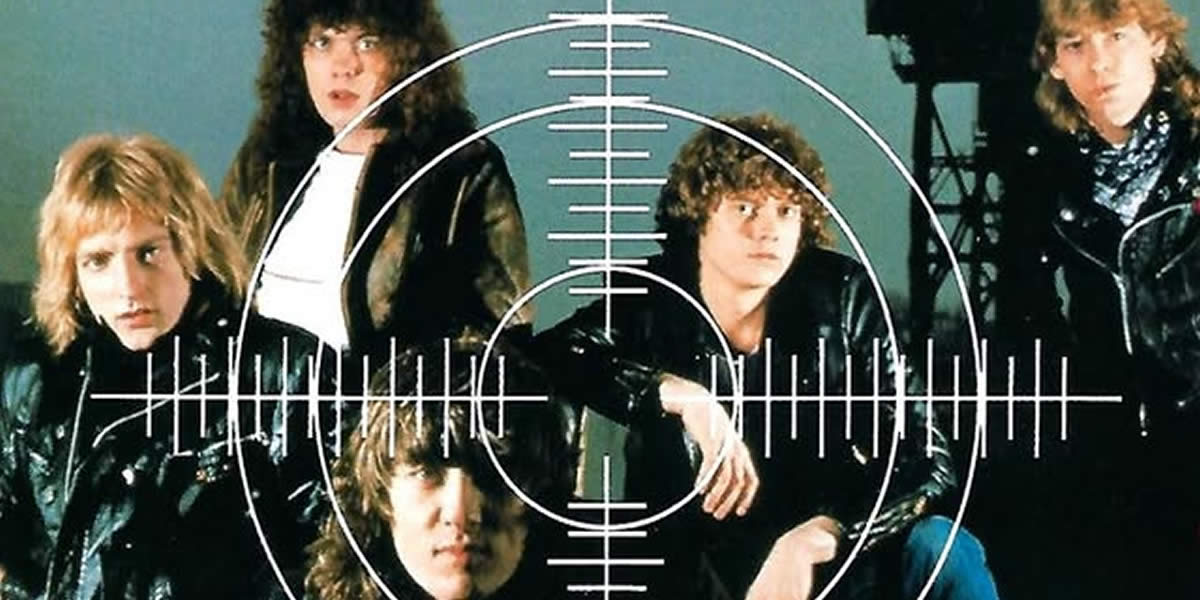
In the early 1980s, Def Leppard were an ambitious young British band trying to turn the energy of heavy metal into something with a much wider reach. They had already released two studio albums, On Through the Night in 1980 and High ’n’ Dry in 1981. Both helped establish their identity, but the breakthrough they wanted was still ahead of them.
That breakthrough arrived with Pyromania, released in January 1983. Produced by Robert John “Mutt” Lange, the album brought together hard-rock guitars, carefully arranged vocals, punchy percussion, and the kind of precision that made every chorus feel engineered for maximum impact. The band did not abandon its heavy roots. Instead, it refined them into a sound that could fill a concert hall and still make sense coming through a car radio.
Photograph was the album’s second track and its first major American single. It became a turning point in the group’s career, reaching No. 12 on the Billboard Hot 100 and spending six weeks at No. 1 on the US rock tracks chart, according to the band’s official history. Those figures mattered because they showed that Def Leppard could cross the boundary between the rock audience and the broader pop market.
The distinction was important in 1983. Rock radio, pop radio, and MTV were increasingly connected, but they did not always reward the same things. A band could have credibility among dedicated rock listeners without becoming a household name. Def Leppard found a way to satisfy both audiences, offering guitars with real force and choruses that were difficult to forget.
Photograph became one of the clearest expressions of that approach. It was direct without being crude, melodic without losing its muscle, and polished without sounding timid. The song announced a band that understood the power of a strong riff, but also knew that a great rock record needed more than volume.
The Sound of Photograph: Big Guitars, Bigger Choruses
Listen closely to Photograph and its apparent simplicity begins to reveal considerable detail. The guitars are thick and bright, but they do not simply pile up into an indistinguishable wall of noise. The rhythm section gives the track a firm foundation, while the vocals build toward a chorus designed to land with almost physical force.
That balance was central to Def Leppard’s emerging identity. Hard rock could be aggressive, but it could also be controlled. The drums could hit hard without swallowing the melody. Guitar parts could sound enormous while remaining clearly defined. The vocals could feel communal, as if a crowd were already joining in, even when the song was coming from a single speaker.
Lange’s production played a major role in that carefully shaped sound. His work emphasized arrangement and detail, allowing individual parts to reinforce one another rather than compete for attention. On “Photograph,” the result is a record that feels expansive while keeping its focus on the hook. Every element seems to lead back to the central musical idea.
The song’s appeal is not dependent on technical knowledge. A listener does not need to understand recording techniques to recognize the effect of a guitar line that immediately catches the ear or a chorus that seems to demand a louder response. But the craftsmanship helps explain why the record has remained satisfying after repeated listens.
There is also a useful distinction between polish and sterility. Photograph is meticulously arranged, yet it retains the physical character of a rock band playing together. The guitars have bite. The drums have weight. Elliott’s performance conveys urgency rather than detached perfection. The production makes the music bigger, not bloodless.
That combination became one of the defining qualities of commercially successful 1980s hard rock. It could sound formidable on a concert stage, exciting on FM radio, and powerful through the relatively modest speakers of a bedroom stereo. Photograph mastered that versatility early in the decade.
Marilyn Monroe, Celebrity, and the Fantasy Behind Photograph
The title points toward the song’s central tension. A photograph preserves an image, but it cannot deliver the person pictured. It offers a form of closeness that is also a reminder of distance. You can keep looking, but looking does not make the fantasy real.
For “Photograph,” the inspiration was connected to Marilyn Monroe, whose image had become one of the most enduring symbols of Hollywood glamour. Monroe had died in 1962, but her face remained everywhere in popular culture, reproduced in photographs, posters, magazines, and later artistic tributes. She represented a form of fame that could survive the person herself.
The song uses that familiar territory to dramatize desire. The woman at its center is glamorous, elusive, and largely imagined. The singer’s fascination grows through the image, not through a relationship with the person. The photograph becomes a substitute for intimacy and, at the same time, proof that intimacy is missing.
That idea suited the early 1980s, when celebrity imagery was becoming increasingly difficult to escape. Teenagers encountered stars on television, in music magazines, on movie posters, and in the pages of glossy publications at the supermarket checkout. A poster could turn a bedroom wall into a private shrine. A magazine photograph could make a distant star feel like a regular presence in someone’s life.
The era’s new music-video culture intensified the effect. Instead of seeing a performer only in a still photograph, viewers could watch a star move, pose, sing, and look directly into the camera. The result was a strange combination of familiarity and distance. A celebrity could feel intimately known despite having no idea who the viewer was.
Photograph captures that contradiction without turning it into a complicated philosophical statement. The image is irresistible, but it cannot satisfy the longing it creates. That tension gives the song a little more emotional substance than its charging guitars might initially suggest.
It is also why the song remains relatable beyond its original decade. The technology changes, but the habit of building fantasies around images does not disappear. Posters become social-media feeds, magazine covers become digital photographs, and distant celebrities remain available for endless viewing. The basic human impulse to confuse an image with a kind of connection is much older than MTV.
MTV Turned Photograph Into a Visual Event
By 1983, music television was changing how audiences discovered bands. MTV had launched in 1981, and its influence was growing as record companies and musicians learned that a compelling video could help a single reach listeners who might never encounter it through radio alone.
Def Leppard were particularly well suited to this environment. Their music was built around strong visual and musical contrasts: sharp guitar riffs, dramatic choruses, coordinated performances, and an image that connected hard-rock attitude with the style-conscious atmosphere of the decade. Photograph gave viewers a memorable entry point.
The video, directed by David Mallet, played with the song’s fixation on glamour and celebrity. Images associated with Marilyn Monroe reinforced the song’s central fantasy, while the band appeared as performers in their own right. The video helped establish Def Leppard as more than a name heard between songs on the radio. They became a group audiences could recognize and associate with a particular sound and look.
The visual presentation mattered because music television encouraged viewers to develop relationships with artists through repeated exposure. A song might be heard while driving, working, or sitting in a friend’s living room. A video brought the band into view, giving the music faces, gestures, clothing, and a recognizable performance style.
For younger viewers, this was a different kind of access to rock. The television screen could deliver a piece of the concert experience without the price of a ticket or the logistics of reaching a venue. It also created a new kind of conversation. Friends could discuss the video as well as the music, remembering a striking image or waiting for a favorite clip to appear again.
The band’s official history notes that Photograph became MTV’s most requested video upon release and a staple of rock radio. That combination of repeated viewing and repeated listening helped build momentum around Pyromania.
MTV did not single-handedly create Def Leppard’s success. The songwriting, performances, production, touring, and record company’s promotion all mattered. But the video gave the song another route into the culture, and the band understood how to make that route work.

How Photograph Helped Define 80s Hard Rock
The early 1980s were a transitional period for hard rock. The rawness of earlier heavy metal remained influential, but a growing number of bands were exploring a more melodic and radio-friendly approach. The results could still be loud and guitar-driven, yet they were arranged with a sharper sense of pop structure.
Pyromania was one of the records that helped bring this sound into the mainstream. Its success showed that a heavy-rock album could sell in enormous numbers without relying exclusively on the established metal audience. In the United States, the album became a major commercial hit, eventually receiving diamond certification from the Recording Industry Association of America.
Photograph was crucial to that rise because it offered a clear introduction to the album’s sound. The riff was immediate, the chorus memorable, and the arrangement forceful without becoming difficult to follow. A listener who did not usually seek out heavy metal could still respond to the song’s melodic clarity.
The track also belonged to a wider cultural moment in which rock music was becoming increasingly visual and carefully packaged. Album covers, music videos, stage clothing, hairstyles, and publicity photographs all contributed to a band’s identity. The distinction between music and image was becoming harder to maintain, and Photograph was almost perfectly suited to a culture fascinated by both.
Still, it would be too easy to describe the song as a product of marketing alone. Its lasting power comes from the music itself. Plenty of records received heavy video rotation and substantial promotion in the 1980s, but only a fraction continued to command attention decades later. Photograph survived because its central musical ideas were strong enough to outlast the promotional machinery that first carried them to a large audience.
Its influence can be heard in the continuing appeal of melodic hard rock: muscular guitars, tightly arranged backing vocals, clear melodic hooks, and choruses that reward a crowd singing together. Later bands would take those ingredients in different directions, sometimes making the sound heavier, sometimes more polished, but the underlying balance remained useful.
Photograph did not single-handedly invent that style. It did, however, provide one of its most memorable early-1980s examples, helping demonstrate how a hard-rock band could sound both powerful and accessible.
From Bedroom Stereos to Car Radios: Experiencing the Song in the 80s
A song’s cultural life is not confined to charts and record sleeves. It also exists in the ordinary places where people hear it, often while doing something else entirely.
In 1983, Photograph could arrive through a kitchen radio, a car stereo, a record player in a teenager’s bedroom, or a cassette copied for a friend. The listener did not need to own Pyromania to become familiar with the single. Rock radio could supply repeated exposure, while MTV added a visual identity that made the song easier to recognize.
Each setting changed the experience slightly. On a car radio, the guitars and drums gave the track the kind of forward momentum that suited an open road. Through headphones, the vocal layers and arrangement became more immediate. On a home stereo, turning up the volume made the production’s size part of the pleasure. And when the song played at a party, its chorus offered an easy invitation for people to join in.
These are not claims about one universal 1980s experience. Listeners had different tastes, different access to technology, and different relationships with rock music. Some followed Def Leppard closely; others knew the band through a handful of radio hits. What connected those experiences was the song’s ability to make itself recognizable quickly.
The era’s physical music culture also gave songs a different kind of presence. Records and cassette tapes could be borrowed, exchanged, copied, and played until the sound became part of a person’s routine. A favorite single might be associated with a particular summer, a first car, a school dance, or the music that played while friends got ready to go out. Those associations were personal rather than universal, but they helped turn popular songs into markers of time.
Photograph had the advantage of being both energetic and emotionally legible. Its story of longing could be understood without close attention to every word, while the musical hook made it easy to return to. It was not a quiet song that demanded a listener’s full concentration. It could seize a room’s attention, then become part of the room’s background, only to draw everyone back when the chorus arrived.
That flexibility helped it live beyond the initial excitement of a new release. The song could belong to the radio, the bedroom, the car, or the party. It worked in each setting without losing its identity.
Why Photograph Still Sounds So Good Today
Listening to Photograph now means hearing it in a world where the way people discover music has changed dramatically. Streaming services can deliver almost any song on demand. Music videos can be replayed instantly. Celebrity photographs circulate continuously, detached from the magazines and television schedules that once controlled their distribution.
Yet the song’s basic appeal remains intact. The guitar work still has a clear sense of momentum, the rhythm remains sturdy, and the chorus arrives with the confidence of a song that knows exactly what it wants to do. Its production is unmistakably rooted in its era, but it does not depend on novelty alone.
Part of the attraction is that the recording has a distinct personality. It is polished, but not anonymous. The guitars are central, the vocals have character, and the song’s structure gives the listener a series of recognizable musical landmarks. Modern recordings can be louder, cleaner, or more digitally elaborate, but technical improvements do not automatically create a memorable song.
The subject matter also travels well. The longing for an unreachable person, the frustration of desire, and the way a single image can become a focus for fantasy are not exclusive to the 1980s. The song’s original celebrity reference gives it historical texture, while the emotion beneath it remains easy to recognize.
Nostalgia contributes to its appeal, but nostalgia alone cannot explain its endurance. Some songs are powerful primarily because they recall a particular time. Others remain enjoyable even for listeners who have no direct memory of their original release. Photograph belongs to both categories. It can evoke the early 1980s for those who remember the period, while still functioning as a direct, energetic rock song for younger audiences.
The band has also continued to keep its earlier catalog visible through live performances, reissues, and anniversary editions. The 40th-anniversary edition of Pyromania, announced for release in 2024, brought renewed attention to the album’s place in Def Leppard’s history. Such milestones offer listeners a reason to revisit the record, but the music still has to justify the return.
Photograph does. Its impact is not based on a clever production trick that has become obsolete or a cultural reference that needs explaining. The song has a strong melody, a compelling rhythmic drive, and a clear emotional center. Those qualities remain effective regardless of the decade in which someone first hears it.
Photograph and the Enduring Power of an 80s Anthem
The best rock anthems do more than describe a feeling. They give that feeling a sound large enough for other people to share. Photograph takes a private fixation and transforms it into something communal. Its narrator is caught in the distance between an image and a real person, but the song itself brings listeners together through its enormous chorus and unmistakable guitar attack.
That contrast is part of what makes it enduring. The subject is intimate, even a little lonely, while the music is expansive. The singer cannot reach the woman he imagines, yet the audience can reach the song together. What begins as a story of frustrated desire becomes an invitation to turn up the volume.
In 1983, Photograph helped introduce Def Leppard to a much larger audience and played a significant role in the success of Pyromania. It reflected a decade in which hard rock was becoming more melodic, studio production more elaborate, and music videos more central to the way artists reached listeners. The song was firmly of its time, but its strengths were never limited to fashion or technology.
Its guitars still hit with conviction. Its chorus still feels built for a crowd. Its story still recognizes the peculiar power of an image that seems to promise more than it can deliver.
That is why Photograph remains a worthy 80s anthem. It preserves the excitement of a band arriving at the right moment, the craft of a carefully constructed rock record, and the familiar ache of wanting something just beyond reach. Put it on today, and the decades fall away for a few minutes. The speakers fill up, the chorus rises, and Def Leppard sound as if they are still making their case for the first time.