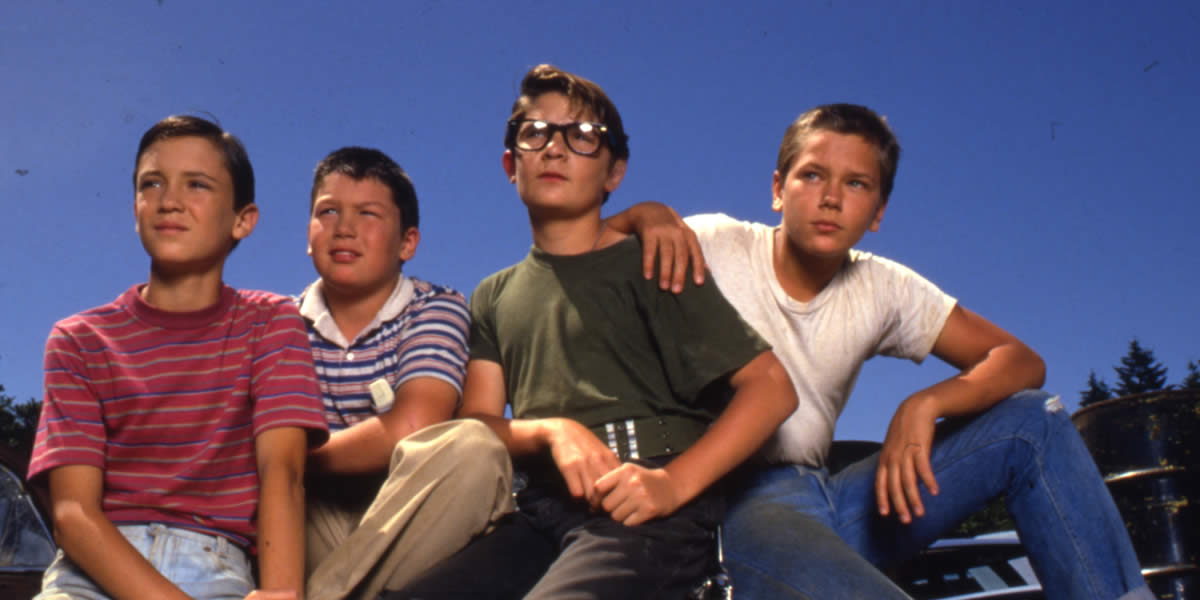
From lonely highways to late-night living rooms, Border Radio brought country music, rock and roll, fiery preachers, and fearless salesmen across the Mexican border, preserving a wild strain of American broadcasting.
Late at night on an American highway, the world could shrink to a pair of headlights, the green glow of a dashboard, and a voice coming out of the radio with startling clarity. The signal might have traveled hundreds of miles, crossing state lines and an international border before finding its way into a truck cab, a farmhouse kitchen, or a bedroom where someone was not quite ready to sleep. The announcer sounded close enough to be sitting in the passenger seat. His stories might be outrageous, his sales pitch impossible to verify, and his music unlike anything playing on the local station.
This was the peculiar magic of border radio, a broadcasting tradition that had begun decades earlier but still held a place in the American imagination during the 1980s. From powerful transmitters on Mexican soil, stations sent music, religious programs, advertisements, and eccentric personalities deep into the United States. Their reach could make geography seem negotiable. Their programming often seemed to operate by different rules from those governing conventional American radio.
By the early 1980s, border radio was no longer at the height of its influence. Commercial radio had changed, television had reshaped popular entertainment, and international agreements were beginning to close the door on the high-powered transmissions that had made the stations famous. Yet the old border blasters still had an audience, especially among travelers and listeners who preferred radio with a little mystery in it.
Their appeal was not simply that they were loud. Border radio offered a version of Americana that was unruly, commercial, spiritual, musical, and deeply personal all at once. It connected the country through voices that ignored the neat boundaries of markets and formats. In the process, it preserved a distinctly old-fashioned idea of broadcasting: that a single human voice, carried through the night, could make an enormous country feel like a neighborhood.
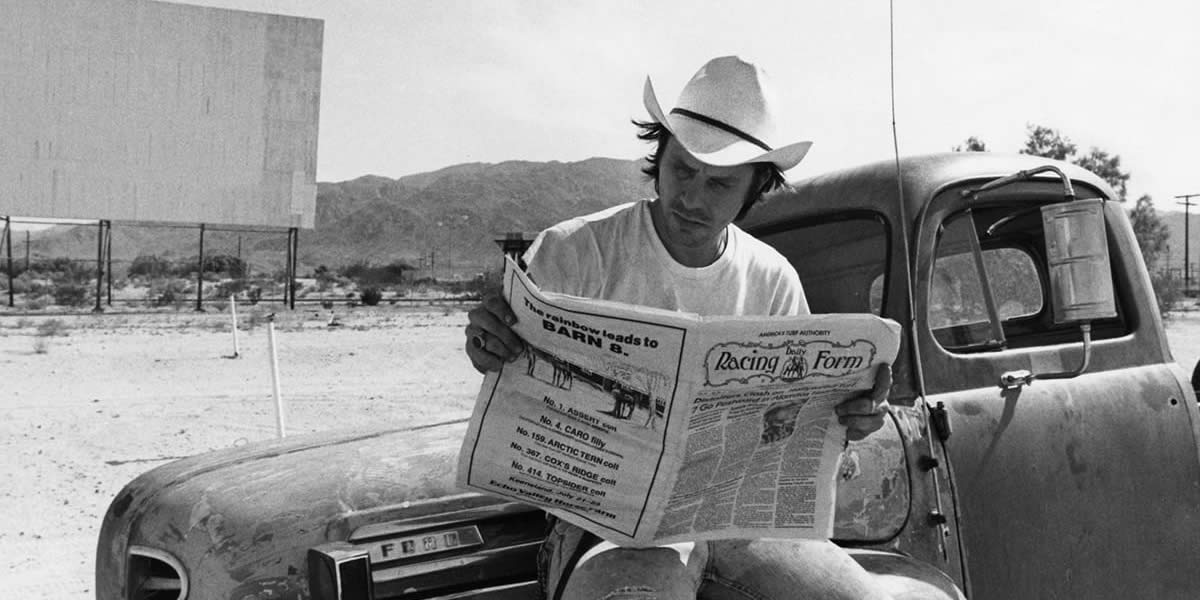
What Border Radio Was and Why It Mattered
Border radio developed along the United States-Mexico border during the early 1930s. Its defining stations operated from Mexico, often close to American towns, and used powerful transmitters to reach listeners north of the border. Because they were licensed under Mexican authority, they could operate outside some of the restrictions imposed on American broadcasters, including limits on transmission power and certain kinds of programming.
The arrangement created an unusual commercial opportunity. American entrepreneurs could reach an American audience from just across the international boundary, selling products and airing material that might have been difficult to broadcast through a conventional U.S. station. Some programs featured music neglected by mainstream networks. Others promoted patent medicines, spiritual cures, mail-order goods, or religious messages delivered with the urgency of a revival meeting.
The stations became known as border blasters, a name that captured both their extraordinary reach and their reputation for overwhelming the dial. Their transmitters were often described in terms of hundreds of thousands of watts, a scale that made ordinary local broadcasting seem modest by comparison. At night, when AM signals could travel especially long distances, a border station might be heard far beyond the Southwest.
The business had roots in the commercial and technological conditions of an earlier radio age. During the 1930s and the decades that followed, radio was one of the most immediate ways to reach a mass audience. Television had not yet become the dominant household screen, and a persuasive voice could sell a product, introduce a new musical style, or build a following across a continent.
By the 1980s, that original world had largely disappeared. American radio had become more segmented, professionalized, and competitive. Yet border radio survived as a reminder of what broadcasting could look like before every station had a carefully defined format and every commercial was expected to sound polished.
It was not a single genre or a unified movement. It was a collection of stations, personalities, business arrangements, and audiences linked by a shared geography and an extraordinary reach. Its appeal lay partly in that untidiness. A listener might encounter a country song, an impassioned preacher, a pitch for a mail-order product, and a flamboyant disc jockey in the space of one evening.
For an audience accustomed to increasingly standardized entertainment, the result could feel like a transmission from a less regulated America, where radio was still a place for experiment, persuasion, and a certain amount of audacity.
Border Radio in the 1980s: A Tradition at a Turning Point
The 1980s were a late chapter in the story of border radio, not its beginning. By then, the most powerful stations had already accumulated decades of history. Their legends included extravagant salesmen, country musicians, religious broadcasters, and disc jockeys who developed larger-than-life public identities.
But the old system was under pressure. FM radio had become central to popular music listening, offering clearer sound and helping reshape the commercial radio business. Television supplied a constant stream of entertainment, while American stations had grown more adept at serving specific audiences. The border stations’ old advantage, their ability to deliver an unusually powerful signal and programming unavailable elsewhere, was no longer as decisive as it had once been.
Still, the tradition was not merely a historical curiosity. In July 1983, The Christian Science Monitor reported on border blasters as a living part of the radio landscape. Its account evoked drivers crossing the American Southwest at night, turning their dials for music, talk, and companionship. The stations continued to offer a striking alternative to more conventional broadcasting, especially for people on long stretches of road.
That setting mattered. The American highway was one of the defining spaces of 1980s life. Interstate travel connected growing suburbs, industrial towns, rural communities, and cities separated by distances that could make a single radio signal feel miraculous. Truck drivers spent long hours away from home. Families drove through the night on vacations. Salespeople and other workers crossed entire states with little to occupy them beyond the road and whatever they could receive over the air.
A border station could turn that empty stretch of darkness into a place of conversation. Its voice did not need to know where the listener was, what job they worked, or whether they were traveling for pleasure or necessity. It simply arrived.
There was also a generational dimension to the stations’ survival. Older listeners remembered a time when border radio had been a more formidable presence, while younger listeners could encounter its eccentric style without knowing its history. Its appeal did not require an understanding of broadcasting regulations or transmitter engineering. The experience was immediate: a strong voice, an unexpected song, an advertisement that seemed to come from another world.
The 1980s therefore brought border radio into a curious position. It was a fading institution that still worked as a living medium, and a commercial enterprise that had acquired the atmosphere of folklore. Its future was becoming uncertain, but its sound remained unmistakable.
The Nighttime Signal and the Romance of the Open Road
Border radio belonged to the night in a way that daytime radio rarely did. The technical behavior of AM broadcasting helped create that identity. After dark, changes in the ionosphere allow medium-wave signals to travel farther by reflecting back toward Earth, making distant stations easier to receive. The effect is not uniform or guaranteed, but it can turn the radio dial into a map of places far beyond the local horizon.
For border broadcasters, nighttime reception was a major part of the attraction. A station transmitting from Mexico could reach listeners well beyond the immediate border region, sometimes across much of the United States. The sound might fade, swell, or compete with another station, giving the listener the sense of catching a message through a vast and invisible landscape.
The experience fit the rhythms of American road travel. Inside a car, the windshield framed a narrow strip of illuminated pavement. Road signs appeared and disappeared. Gas stations and diners offered brief islands of light, then receded into darkness. The radio filled the silence without demanding the driver’s eyes or hands.
A local station could offer familiar voices and predictable programming. A distant border station carried a different kind of promise. It might introduce a performer the listener had never heard, launch into an extended religious appeal, or present a sales pitch so elaborate that it became entertainment in its own right. The lack of polish could be part of the pleasure. The listener was not always sure what would come next.
The radio itself made that uncertainty intimate. Unlike a television program, a broadcast did not need to show a place or a face. The imagination supplied the missing details. A booming announcer might conjure a crowded studio, a dusty border town, or a salesman surrounded by boxes of products. The actual setting could be far less dramatic than the voice suggested. That distance between sound and image was one of radio’s enduring strengths.
Border radio added another layer: the possibility that the voice was coming from outside the rules of the country in which the listener sat. The transmitter might be only a few miles across the border, yet its signal could feel like an intrusion from somewhere much farther away. The border became less a line on a map than a point of departure for sound.
That quality helped make the stations part of the mythology of the American road. They were not just sources of music and talk. They were companions for the miles when the passengers were asleep, the towns had closed for the night, and the landscape seemed to stretch beyond the reach of ordinary life.
Country Music, Rock and Roll, and Sounds Outside the Mainstream
One of border radio’s most lasting contributions was its willingness to broadcast music that established American stations often overlooked. In the early decades of the tradition, country music and the styles then commonly labeled hillbilly music found valuable airtime on border stations. That exposure mattered at a time when the commercial radio industry did not always regard rural performers as suitable for broad audiences.
The stations helped create space for music that spoke directly to working people, rural communities, and listeners whose tastes were not well represented by national networks. Country music was especially suited to the format. Its stories of travel, heartbreak, hard work, faith, and personal trouble were understandable across wide stretches of the country. A song could feel local in its details and universal in its emotional shape.
As popular music changed, border radio’s repertoire could also include rhythm and blues, rock and roll, and other styles that crossed the boundaries of conventional programming. The stations were not solely responsible for the growth of these genres, but they formed part of the wider ecosystem through which music reached listeners outside the major entertainment centers.
By the 1980s, country music had become a major commercial force, while rock and roll had passed through several generations of change. Music television was giving performers new ways to build an audience, and FM stations were central to the business of popular music. Border radio no longer occupied the same position it had held when its powerful AM signals could bring relatively unfamiliar sounds to listeners across the country.
Yet the memory of those earlier broadcasts remained important. The border stations represented a time when radio could act as an informal discovery service, bringing music to people who might never visit a record store in a major city or read a national music magazine. The connection was direct and often unplanned. A song arrived because the station played it, not because a listener had searched for it.
That model has continued to matter in the way Americans think about radio. The medium’s value has never rested only on delivering the biggest hits. It also lies in surprise, in the pleasure of hearing something unfamiliar, and in the feeling that a broadcaster is sharing a sound rather than merely filling a schedule.
Border radio’s musical legacy is therefore larger than any one playlist. It belongs to the history of broadcasting as a way of widening the audience for regional styles and giving commercially marginal sounds a route into public life. The stations’ influence was uneven, and their programming mixed genuine discovery with aggressive selling, but they helped preserve the idea that a radio signal could carry more than the tastes of the cultural center.
Wolfman Jack and the Power of a Radio Personality
No discussion of border radio’s cultural afterlife can ignore Wolfman Jack. Born Robert Weston Smith, he became one of the most recognizable radio personalities of the twentieth century, building a distinctive on-air presence through a rough-edged voice, playful menace, and an ability to make a broadcast sound like a private performance.
Wolfman Jack’s career was closely associated with the border-radio world, particularly XERF, the powerful station broadcasting from Ciudad Acuña, across the river from Del Rio, Texas. His broadcasts helped turn the border station into part of American popular culture. Listeners could hear a personality whose style seemed deliberately untamed, as if he were broadcasting from a world where ordinary radio etiquette did not apply.
His significance extended beyond the technical reach of the transmitter. A powerful signal could make a station audible, but a memorable personality could make people want to return. Wolfman Jack understood how to turn a voice into an event. His delivery was theatrical, funny, and unpredictable, giving listeners a sense that the person behind the microphone was enjoying the performance as much as the audience was enjoying the show.
His public image also outgrew the border stations. George Lucas’s 1973 film American Graffiti, set in 1962, featured Wolfman Jack as himself and helped introduce his radio persona to audiences who might never have tuned in to XERF. By the 1980s, the film had become an important part of the popular memory of early rock-and-roll culture, and Wolfman Jack was widely recognizable as a symbol of the great American disc jockey.
This distinction matters because border radio’s reputation was built from a mixture of actual broadcasts and the stories people told about them later. Wolfman Jack’s own accounts of the station’s rough history could be colorful, and some dramatic tales have been disputed by people involved in its operation. The history is more complicated than the legend, but the legend reveals something real about the medium’s appeal.
Radio encouraged listeners to imagine the person speaking. A voice could sound rebellious, friendly, dangerous, or outrageous without the audience seeing the broadcaster. Wolfman Jack made that invisible performance feel vivid. He embodied the border station’s mix of showmanship and freedom, turning a technical and commercial arrangement into a cultural character.
His influence was not that every disc jockey copied his voice. It was that he demonstrated how a broadcaster could become more than an announcer. In an era when radio personalities competed with television stars and an expanding range of entertainment, the idea of a distinct, recognizable voice remained powerful. Border radio helped create the conditions for that kind of mythology, and Wolfman Jack became its most famous ambassador.

Preachers, Pitchmen, and the Unruly Business of Belief
Music was only one part of the border-radio experience. The stations also became known for religious broadcasts and high-pressure advertising, sometimes delivered in styles that seemed to belong to an entirely different commercial universe.
Listeners might hear a preacher speak with the urgency of a tent revival, promising spiritual renewal or warning against moral decline. Another program might feature a salesman describing a product with extravagant confidence. Some broadcasts promoted health remedies and mail-order goods whose claims would face serious scrutiny under modern standards. Others blended religious conviction with fundraising and merchandise.
These programs were not incidental to the business. Border radio’s ability to reach a large audience made it attractive to advertisers and broadcasters who wanted access to customers beyond the immediate border region. When American rules or commercial conventions limited a particular pitch, broadcasting from Mexico could offer a different set of possibilities. That freedom also created room for questionable claims and aggressive sales techniques.
The result was an uneasy mixture of entertainment and commerce. A preacher might speak to a listener’s deepest fears and hopes, then invite that listener to send money or request a religious item. A pitchman could build suspense around a product, using repetition, personal testimony, and a sense of urgency to make the offer difficult to ignore. In a medium without pictures, voice carried nearly the entire burden of persuasion.
There was a distinctly American quality to this combination, though not necessarily a flattering one. Border radio drew on the country’s traditions of revivalism, mail-order commerce, self-improvement, and entrepreneurial improvisation. It offered access to audiences on an immense scale while leaving the listener to judge the credibility of the voice on the other end.
That tension was part of the stations’ appeal. Some listeners approached the programming as serious religious instruction. Others enjoyed the performance, whether or not they believed the claims. Still others might have tuned in for music and found themselves listening to a sales pitch because changing the station was less interesting than hearing what the announcer would say next.
It would be a mistake to romanticize the entire enterprise. The same freedom that allowed overlooked musicians to find an audience could also make it easier for unscrupulous operators to sell dubious products. Border radio was inventive, but it was not automatically virtuous. Its history includes both the democratizing possibilities of mass communication and the vulnerabilities that arise when persuasion outruns accountability.
For 1980s listeners, however, this mix was part of what made the stations distinctive. Their broadcasts sounded less like a carefully managed corporate product than a crowded marketplace of faith, music, ambition, and salesmanship. They offered a vivid reminder that American popular culture has always included both idealism and hustle.
The Border as a Cultural Meeting Place
The phrase border radio can suggest a simple story about American broadcasters finding a loophole in Mexican territory. That account is incomplete. The stations operated in a real border region, shaped by communities, businesses, languages, and relationships on both sides of the international line.
The geography was crucial. Towns such as Del Rio, Texas, and Ciudad Acuña, Coahuila, faced each other across the Rio Grande. Their proximity allowed broadcasters to serve an American audience while operating from Mexico. The signal could cross the river in seconds, but the communities themselves had their own histories and identities, which were not reducible to the American listeners who heard the broadcasts.
Border radio was built within that cross-border setting, even when much of its programming was aimed northward. The transmitters, licenses, studios, technicians, managers, and business arrangements belonged to a place where international boundaries shaped everyday commerce. The border was a practical reality, not simply a dramatic backdrop.
The stations also complicated the idea that American popular culture traveled only from large U.S. cities outward. A broadcast originating in Mexico could reach listeners in Texas, the Midwest, or farther away. The flow of entertainment did not always follow the routes imagined by the country’s major networks and cultural institutions.
For American audiences, this could make the border seem both familiar and exotic. The broadcasts carried recognizable music and sales pitches, yet the stations operated under call letters and from locations that many listeners might never have visited. Their voices entered ordinary domestic spaces from a place that remained distant in the imagination.
The cross-border story also reminds us that cultural influence is not the same as ownership. The stations became part of American radio history because of the audience they reached, but their operations depended on Mexican licensing and a complicated relationship between two national broadcasting systems. Any account that treats Mexico merely as a convenient place to evade American rules misses the broader setting in which the stations functioned.
By the 1980s, this geography was becoming less useful to the traditional border-blaster model. The radio industry had changed, and international agreements were bringing the use of powerful clear-channel frequencies under greater coordination. Yet the border itself remained central to the stations’ identity. It was the source of their legal distinction, their technical opportunity, and much of their mystique.
Border radio captured a particular kind of Americana precisely because it did not fit neatly inside national boundaries. Its sound belonged to American popular life, but its origins and operation revealed how much that life depended on places and people just beyond the familiar frame.
Why Border Radio Faded, and What It Left Behind
By the middle of the 1980s, the conditions that had sustained the most powerful border stations were changing rapidly. The decisive blow came in 1986, when the United States and Mexico entered a new regional broadcasting arrangement that allowed each country to use the other country’s clear-channel frequencies for lower-powered local stations during nighttime hours. In practice, those transmissions could drown out the long-distance signals on which the border blasters depended.
The change did not mean that all cross-border radio stopped or that every station vanished overnight. It did, however, undermine the central advantage of the old system: the ability to send a powerful signal far into the United States after dark. XERF, one of the best-known stations in the tradition, was transferred to Mexico’s public radio system in 1986. Its later history continued, but the age of the high-powered border blaster was effectively ending.
The decline also reflected broader changes in listening habits. FM broadcasting had become dominant for much music listening. Portable cassette players, car stereos, and later generations of personal electronics gave audiences more control over what they heard. Cable television and the expanding entertainment market made it harder for any single radio station to command the kind of attention that border broadcasters once enjoyed.
But the old stations left behind more than a technical footnote. They helped establish the idea that radio could be a place of personality and discovery, where the voice mattered as much as the playlist. They provided an outlet for music that conventional broadcasters sometimes ignored, and they showed how an audience could form around a broadcaster who sounded unlike anyone else on the dial.
Their legacy also lives in the mythology of late-night listening. The lonely driver turning the dial, the distant voice cutting through static, and the sense that something unexpected might be waiting on the next frequency remain familiar images of radio culture. Later technologies have changed the means of delivery, but the emotional appeal of an unplanned encounter with a voice or a song has not disappeared.
For people who remember border radio in the 1980s, the stations may represent a particular kind of freedom: not necessarily freedom from every rule, but freedom from the sameness of highly organized entertainment. They could be loud, excessive, unreliable, and occasionally absurd. They could also be funny, moving, or musically adventurous. Their appeal lay in the fact that listeners were never entirely sure which version they would get.
That unpredictability is difficult to reproduce in a media environment shaped by recommendations, playlists, and personalized streams. Modern listeners can summon almost any song they want, yet the experience of stumbling across a distant broadcast has a different character. It asks the listener to take a chance rather than select a known destination.
Border radio’s story is ultimately about the relationship between technology and human attention. The transmitter made the signal possible, the border made the business unusual, and the voices gave people a reason to listen. The stations connected places separated by distance and national rules, turning the night air into a shared space for music, persuasion, faith, and performance.
The 1980s caught this tradition near its end, when the old signals still traveled but the world around them had changed. That timing gives border radio its special place in the decade’s cultural history. It was a surviving fragment of an earlier America, one in which radio could feel unruly and immense, and in which a voice from across the border could accompany a traveler through the dark.
The signal eventually weakened. The memory endured because the experience was never only about watts or frequencies. It was about the strange intimacy of hearing a stranger speak as if the distance between you did not matter, and discovering, for a few minutes on a long night, that the world was larger than the road ahead.