Tim Burton’s Beetlejuice turned death into dark comedy, mixing grotesque humor, handmade special effects, and gothic imagination into an unforgettable 1980s classic.
In a quiet New England town, a young couple drives home along a winding country road. The trees are thick, the bridge is narrow, and the day has the calm, ordinary quality of a life that seems likely to continue much as it always has. Then comes an accident. Within minutes, Adam and Barbara Maitland are dead, although it takes them a little while to understand what has happened.
Their house remains standing. Their furniture is still in place. The rooms retain the familiar comfort of a home they have spent years making their own. But the world outside has become strange, and the rules governing their existence have changed in ways nobody has thought to explain.
This is where Beetlejuice begins to depart from the expected ghost story. Death does not open onto a terrifying abyss or a solemn meeting with the supernatural. Instead, it leads to unanswered questions, confusing instructions, and an afterlife that appears to have an office for everything except making sense.
Released in 1988, Tim Burton’s Beetlejuice took a familiar horror premise and turned it into something wonderfully difficult to categorize. It was a ghost story, a domestic comedy, a fantasy, and a showcase for visual effects that looked as if they had escaped from a particularly imaginative child’s nightmares. It could be grotesque one moment and surprisingly tender the next.
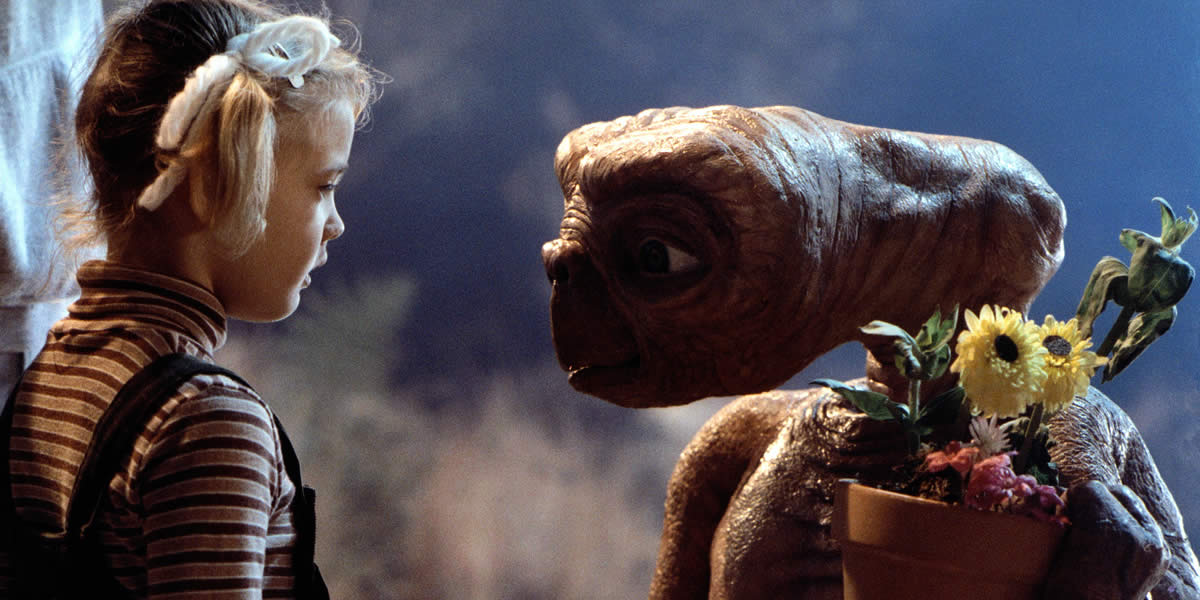
The film arrived during a decade crowded with supernatural entertainments, from the affectionate spookiness of Ghostbusters to the family-friendly fantasy of E.T. the Extra-Terrestrial. But Beetlejuice followed its own instincts. Its dead people were confused homeowners, its living people were frequently insufferable, and its most powerful supernatural character was a foul-mouthed opportunist who treated the afterlife as a personal playground.
For audiences in the 1980s, the film offered a different way to laugh at death, authority, family life, and the strange rituals of everyday existence. It also introduced a distinctive visual sensibility that would become closely associated with Burton’s filmmaking. Beneath the striped suit, the wild hair, and the supernatural slapstick was an unexpectedly perceptive comedy about belonging, grief, and the difficulty of finding a place in a world that seems designed for somebody else.

How Beetlejuice Changed the Rules of the 1980s Ghost Story
By the late 1980s, audiences were accustomed to seeing the supernatural treated with both seriousness and humor. Ghosts could frighten, comfort, or entertain, and the decade’s films often moved between those possibilities. Beetlejuice took the comic approach much further by imagining the afterlife not as a mystery to be solved but as a badly organized institution that the dead must learn to navigate.
Adam and Barbara Maitland, played by Alec Baldwin and Geena Davis, are ordinary people with ordinary attachments. They live in a picturesque house, enjoy a peaceful existence, and have no particular desire to become involved in the supernatural. After their fatal accident, they return home as ghosts and discover that their former property is now vulnerable to a new family.
The newcomers are the Deetzes, led by Charles, a businessman played by Jeffrey Jones, and his artist wife, Delia, played by Catherine O’Hara. They arrive from New York and immediately begin transforming the house according to Delia’s aggressively modern artistic vision. The familiar domestic space becomes a battleground between the people who once lived there and the people who now intend to remake it.
The conflict is funny because the Maitlands are not evil spirits seeking revenge. They are homeowners trying to protect their property, except that their usual methods no longer work. A warning, a slammed door, or a frightening appearance is difficult to manage when the people you are trying to scare cannot see you properly, or simply assume that the house needs a more dramatic interior design.
The film turns a traditional haunted-house story inside out. Instead of asking how the living can escape the dead, it asks how the dead can get the living to leave. The ghosts are the displaced residents, while the living intruders have the legal and practical advantages.
That reversal reflects a familiar anxiety of the 1980s: the feeling that home, identity, and personal space could be transformed by forces beyond one’s control. The decade’s popular culture was fascinated by real estate, conspicuous consumption, new money, and the pursuit of a more impressive life. In Beetlejuice, those ambitions arrive in the form of the Deetzes, who regard the Maitlands’ comfortable old house as raw material for an entirely different aesthetic.
Yet the film never becomes a simple morality play. Charles is not a monster, and Delia is more ridiculous than dangerous. They are recognizable people with their own desires and frustrations. The comedy emerges from the collision of incompatible worlds, with the supernatural providing a way to make an ordinary domestic disagreement literally impossible.
The result was a ghost story that did not need to choose between being frightening and funny. Its afterlife was absurd, its living characters were strange, and its dead couple remained sympathetic precisely because they were so unprepared for any of it.
Tim Burton’s Beetlejuice Introduced a Distinctive Gothic Imagination
Before Beetlejuice, Tim Burton had already begun developing the visual language that would distinguish his films. His early career included work as an animator at Disney and the short film Vincent in 1982, which combined stop-motion techniques with a story about a boy whose imagination takes him into the macabre. His first feature, Pee-wee’s Big Adventure, arrived in 1985 and established him as a director with an unusual sense of visual comedy.
Beetlejuice, his second feature, gave that sensibility a world of its own.
The film’s most striking contrast is between the orderly appearance of small-town New England and the chaotic shapes of the supernatural. The Maitlands’ home initially feels warm, traditional, and reassuring. Its wooden surfaces, familiar rooms, and scenic surroundings suggest a life that has been carefully assembled over time. But once the ghosts begin exploring the boundaries of their new existence, the film’s visual logic becomes increasingly unstable.
The afterlife contains waiting rooms, corridors, officials, strange creatures, and bureaucratic procedures that appear to have been devised by someone who has never encountered a problem they could not make more complicated. Its inhabitants are not arranged into a reassuring hierarchy of angels and demons. They are stuck in an eccentric administrative system that seems to run on forms, queues, and unexplained rules.
Burton’s style draws on gothic architecture, German Expressionist imagery, vintage monster movies, and the surreal possibilities of animation. Rather than aiming for seamless realism, he allows the world to look artificial. Buildings distort, faces stretch, and creatures move with the uncanny rhythms of handmade effects.
That deliberate artificiality is central to the film’s personality. The viewer is not expected to believe that every supernatural event could happen in the physical world. Instead, the film invites an audience to accept a more flexible reality, one in which a ghost can become a grotesque creature and a harmless-looking room can suddenly turn into a nightmare.
Production designer Bo Welch played an essential role in creating that environment. The contrast between the Maitlands’ home, the Deetzes’ alterations, and the bizarre landscapes of the afterlife gives the film a visual structure that supports its comedy. Every setting tells the viewer something about the people who occupy it, and the supernatural spaces seem to reveal the absurdity hidden beneath everyday rules.
The movie’s design also helped distinguish Burton from directors whose fantasies relied on polished, convincing illusions. Beetlejuice embraced the look of an imaginative construction. Its world seemed less like a place discovered by a camera than one assembled from scraps of nightmares, old movie tricks, and the contents of an unusually busy imagination.
This was a memorable contribution to 1980s fantasy cinema. At a time when effects technology was expanding the possibilities of blockbuster filmmaking, Burton demonstrated that visual invention did not always require a convincing imitation of reality. Sometimes the more interesting choice was to make the unreal look unmistakably unreal.
Michael Keaton Made Beetlejuice an Unforgettable Comic Menace
The title character does not dominate every minute of the film, but his presence changes the temperature whenever he appears.
Michael Keaton plays Betelgeuse, a self-described bio-exorcist who offers the Maitlands a solution to their Deetz problem. His services come with a warning the ghosts are not equipped to appreciate: this is not a trustworthy professional who has arrived to restore order. He is a supernatural hustler whose enthusiasm for chaos far exceeds his interest in helping anyone.
Keaton’s performance is one of the film’s great balancing acts. Beetlejuice is vulgar, physically unpredictable, gleefully manipulative, and frequently disgusting. Yet he is also funny in a way that makes it difficult to look away. He can turn an ordinary conversation into a performance, transforming his body, voice, and expressions as if he is constantly auditioning for the attention of everyone in the room.
The character’s appearance helps. His greenish hair, chalky face, stained clothing, and black-and-white striped suit make him look as if he has been assembled from the rejected pieces of several different nightmares. His design is deliberately unappealing, but it is also immediately recognizable. Even in a film full of strange creatures, Beetlejuice looks like a creature who would be difficult to mistake for anyone else.
Keaton avoids playing him as a conventional villain. Beetlejuice is not driven by a coherent plan for world domination or a tragic grievance. He is opportunistic, selfish, and perpetually looking for his next chance to cause trouble. His motives are often small, which makes his behavior even more ridiculous. The character treats the afterlife as a venue for personal entertainment.
That performance also illustrates how much physical comedy can contribute to a fantasy character. Keaton’s movements are exaggerated without becoming mechanically predictable. He seems to be improvising his own body from one moment to the next, and the result is a character who feels unstable even when standing still.
The role also gave Keaton an opportunity to move away from the comparatively grounded characters that had defined much of his screen work. His later casting as Batman in Burton’s 1989 film would surprise some observers who associated the actor with comedy. Beetlejuice helped demonstrate that Keaton could combine an unusual comic sensibility with the capacity to inhabit a larger-than-life character.
It is tempting to think of the film as a star vehicle for Beetlejuice, but the character’s limited screen time is part of the design. He is most effective as an intrusion into the story, a chaotic force that the other characters foolishly invite into their lives. If he were present constantly, the film might lose the surprise that makes his appearances so memorable.
Instead, he arrives like a bad idea that has somehow learned to talk. The Maitlands want a solution to their problem and get something much more dangerous, while the audience gets a comic performance that turns the film’s supernatural premise into something anarchic.
Beetlejuice Used Stop-Motion and Practical Effects to Make the Impossible Funny
One of the most distinctive features of Beetlejuice is its affection for visible artifice. The film’s supernatural events are not always designed to look real. Many are designed to look strange, awkward, and funny, as if a monster movie had been rebuilt in a workshop by a team with excellent technical skills and a mischievous sense of humor.
The production used a mixture of stop-motion animation, prosthetic makeup, puppetry, replacement animation, and other practical techniques. Stop-motion was especially useful for creatures and objects that could not be made to move convincingly through conventional performance. Models could be repositioned frame by frame, creating movements that felt both deliberate and unnatural.
The effects suit the film because their oddness becomes part of the joke. A creature that looks slightly artificial can be more unsettling than one that resembles a real animal, particularly when it behaves in a way that violates ordinary expectations. A distorted face, a moving model, or a figure with impossible proportions can communicate the freedom of a world in which physical laws have become optional.
The film’s visual effects budget was modest by the standards of many major fantasy productions. The American Film Institute’s catalog records a production cost of roughly $14 million, while Turner Classic Movies notes that only a small portion of the budget was allocated to special effects. The finished movie’s imagination was therefore not simply a matter of spending lavishly on technology. It depended on selecting techniques that could produce maximum expressive effect.
The makeup work was particularly important. Beetlejuice’s appearance had to convey decay and grotesque energy without preventing Keaton from performing the character’s rapid physical comedy. Other supernatural figures required their own distinct looks, helping the afterlife feel populated rather than like a series of isolated effects sequences.
The film’s makeup artists, Ve Neill, Steve LaPorte, and Robert Short, won the Academy Award for Best Makeup at the 61st Academy Awards in 1989. That recognition reflected the importance of the film’s visual construction to its overall impact. The effects were not merely decoration added to a finished story. They helped determine what kind of story the movie could tell.
The deliberately handmade quality also gave Beetlejuice a connection to earlier generations of fantasy cinema. Long before computer-generated imagery became a dominant tool, filmmakers had used miniatures, painted backdrops, optical tricks, puppets, and stop-motion to make the impossible visible. Burton’s film treated those methods not as limitations to be hidden but as creative resources.
For audiences accustomed to the increasingly polished visual spectacle of 1980s Hollywood, this approach offered a different kind of pleasure. The effects did not ask viewers to admire how convincingly the movie replicated the world. They invited viewers to enjoy the strange things that could happen when a filmmaker stopped trying to make the world look normal.

The Deetzes, Lydia, and the Film’s Unusual View of Family Life
Although Beetlejuice supplies the movie’s most outrageous comedy, the emotional center belongs to the people trying to find their place in the same house.
The Deetz family represents a different kind of disruption from the supernatural one. Charles wants a quieter life away from New York. Delia hopes to establish herself as an artist and remake her surroundings according to her own vision. Their daughter, Lydia, played by Winona Ryder, feels detached from the family and the world around her.
Lydia’s dark clothing, pale makeup, and interest in photography mark her as an outsider. But the film does not treat her appearance as proof that she is dangerous or unworthy of affection. She is observant, lonely, and unusually receptive to the possibility that the world contains more than the people around her are prepared to acknowledge.
Her relationship with the Maitlands gives the story its emotional dimension. The ghosts cannot make themselves visible to most living people, but Lydia recognizes them. In a household where the adults are occupied with their own plans, she finds an unlikely connection with two people who are no longer alive but remain attached to the idea of home.
That arrangement complicates the movie’s usual division between the living and the dead. The Maitlands have lost their physical lives, but they retain a strong sense of who they are and what matters to them. Lydia is alive, yet she feels disconnected from the people who are supposed to understand her. Their friendship becomes a meeting between people who occupy different kinds of isolation.
Ryder’s performance is restrained compared with Keaton’s whirlwind presence. That contrast is important. Lydia does not need to outdo the supernatural chaos around her. Her quietness gives the film a point of emotional stability, and her curiosity makes her an active participant in the story rather than simply a frightened observer.
The movie also finds comedy in the Deetzes’ attempts to control their surroundings. Delia’s artistic ambitions are treated with a combination of visual exaggeration and social observation. Her renovations turn the house into an exercise in self-expression that disregards the history of the people who lived there before her. The joke is not that modern art is inherently absurd, but that the desire to impose one’s identity on a space can become comically insensitive.
This was a useful counterpoint to the supernatural plot. The film’s ghosts are not the only characters who struggle to coexist with other people. The living are equally capable of treating a shared home as an extension of their own desires.
Beneath the grotesque humor, Beetlejuice suggests that belonging depends on recognizing others as people with their own attachments. The Maitlands must learn that their old life cannot simply be restored. The Deetzes must confront the fact that a house is more than a blank surface for their ambitions. Lydia, meanwhile, finds connection in the very place where everyone else sees an inconvenience.
The film never turns this idea into a solemn lesson. It remains a comedy about an extraordinary set of circumstances. But its affection for outsiders helps explain why the characters have remained appealing long after the special effects and fashion have become familiar markers of the era.
Why Beetlejuice Captured the Spirit of 1980s Pop Culture
The late 1980s were a fertile period for entertainment that crossed the boundaries between genres. Audiences could move from broad comedy to horror, from fantasy to family drama, often within the same film. Beetlejuice was unusually comfortable with those shifts, and its mixture of grotesque imagery and accessible humor made it difficult to file neatly under one label.
It also arrived at a moment when distinctive directors were becoming important to the way audiences understood popular movies. Tim Burton’s work offered a recognizable visual identity, one built around outsiders, exaggerated architecture, black humor, and the collision of the ordinary with the uncanny. Viewers could begin to recognize a Burton film through its design and sensibility, even before knowing all the details of the story.
Danny Elfman’s score contributed to that identity. Its restless rhythms and theatrical orchestration give the film a sense of motion that can shift from playful to ominous without warning. The soundtrack also incorporates Harry Belafonte recordings, including “Day-O” and “Jump in the Line,” which become memorable parts of the film’s comic set pieces.
The use of Belafonte’s music is particularly revealing. The songs carry their own warmth and familiarity, but the film places them in scenes where the characters lose control of their bodies and circumstances. The result is funny partly because the music remains so assured while the people on screen are caught in events they cannot explain.
That combination of familiar popular music and supernatural disruption reflects the film’s broader method. Beetlejuice does not build an entirely separate fantasy universe and ask the audience to leave ordinary life behind. It takes recognizable domestic spaces, familiar social ambitions, and well-known music, then rearranges them until the everyday becomes strange.
The movie also belonged to a decade that enjoyed visually distinctive characters. Music videos, album covers, fashion photography, and commercial entertainment all placed increasing emphasis on images that could be recognized instantly. Beetlejuice’s striped suit and wild hair made him an ideal character for that visual environment, while Lydia’s gothic wardrobe helped establish a look that would be associated with the film for decades.
Yet the film’s cultural significance goes beyond the fact that its characters were easy to recognize. It made room for a type of protagonist who did not fit conventional expectations of attractiveness, politeness, or social success. Its world was populated by misfits, awkward spirits, eccentric artists, and people who felt uncomfortable in their own homes. Their differences were not obstacles the story had to erase before it could reach a happy ending. They were the source of much of its personality.
The film’s commercial performance confirmed that its unusual approach could reach a broad audience. It earned approximately $73 million in domestic box-office returns during its original release, according to Turner Classic Movies, making it a significant success relative to its production budget. It also helped establish Burton as a filmmaker capable of delivering a commercially successful studio film without surrendering his distinctive style.
Beetlejuice’s Lasting Influence on Dark Comedy and Fantasy
A successful film can remain in public memory for many reasons. Some are remembered for a performance, others for a line of dialogue, a costume, or a special effect. Beetlejuice became memorable because these elements reinforced one another. The title character’s appearance, Burton’s visual world, the film’s treatment of death, and its comic rhythms all belonged to the same imaginative universe.
The movie’s influence is visible in the way later popular culture has treated the supernatural as an opportunity for comedy rather than a subject that must remain solemn. Its afterlife is not a distant realm of moral judgment. It is a place where the dead have paperwork, professional services, personal frustrations, and strange bureaucratic rules. The idea is funny because it takes a universal mystery and imagines that human institutions have somehow followed us there.
That approach also makes death less remote. Beetlejuice is not a film that asks viewers to contemplate mortality through solemn speeches or tragic grandeur. It uses absurdity to make the subject approachable. The Maitlands’ predicament is frightening in principle, but their confusion, stubbornness, and desire to protect their home give the story a domestic familiarity.
The film’s visual influence is equally enduring. Its blend of gothic shapes, vivid contrasts, handmade monsters, and suburban settings helped establish a style that would reappear in later Burton projects, including Edward Scissorhands and The Nightmare Before Christmas, which Burton conceived and produced. The precise look varies from film to film, but the fascination with outsiders and artificial worlds remains recognizable.
The movie also helped launch the screen careers and public profiles of several performers at an important moment. Ryder’s Lydia became an enduring figure for viewers drawn to alternative fashion and outsider identity. Keaton demonstrated a startling range in a role that mixed physical comedy with grotesque fantasy. Davis and Baldwin provided the grounded warmth that allowed the supernatural events to become emotionally legible.
In 1989, Burton and Keaton reunited for Batman, a film that brought a darker visual approach to one of the most recognizable characters in American popular culture. Their collaboration helped demonstrate that a director known for strange comedy could also reshape a major comic-book property. The connection between the films was not that they shared a tone, but that both used a strong visual identity to reinterpret familiar material.
Beetlejuice also found a life beyond its original release. It inspired an animated television series in the late 1980s and early 1990s, helping bring its characters and supernatural humor to a younger audience. In 2018, a Broadway musical adaptation introduced the story to a new generation through a different medium. The film’s 2024 sequel, Beetlejuice Beetlejuice, brought Keaton, Ryder, and other returning cast members back into the world Burton had created.
Those later versions demonstrate the durability of the original idea, but they also reveal how specific the 1988 film remains. Its rough edges, practical effects, and peculiar balance of warmth and vulgarity belong to a particular moment in Burton’s career and in Hollywood filmmaking. The film can be revisited and expanded, but its first combination of influences cannot simply be reproduced.
That is part of what makes it a lasting work of 1980s popular culture. It was distinctive enough to become a franchise, yet strange enough to retain the feeling of an unexpected discovery.
Why Beetlejuice Still Makes the Afterlife Feel Alive
The most enduring image from Beetlejuice may be the title character himself, grinning through a face that looks as if it has been dug out of the ground and put back together in a hurry. But the movie’s deeper achievement is the world surrounding him.
It imagines death as a change in circumstances rather than an end to personality. The dead remain impatient, confused, stubborn, and occasionally ridiculous. The living continue to make bad decisions, misunderstand one another, and try to control spaces that do not belong entirely to them. The afterlife is strange, but it is not free of the frustrations that make ordinary life complicated.
That is why the film’s comedy works alongside its darker imagery. Its jokes do not require the audience to stop caring about the characters. The Maitlands’ desire to preserve their home is funny because it is understandable. Lydia’s loneliness matters because the film treats her as more than a visual symbol of teenage gloom. Even Beetlejuice, for all his outrageous behavior, becomes entertaining because Keaton gives his disorder a recognizable comic logic.
The movie also offers a quietly reassuring idea about outsiders. People who feel misplaced do not necessarily need to become conventional in order to find connection. Lydia does not have to abandon her dark clothing or her fascination with death to become part of a family. The Maitlands do not have to recover their old lives to develop a meaningful relationship with someone new. The story’s resolution depends less on eliminating difference than on learning to live with it.
For an audience in 1988, this made Beetlejuice a welcome alternative to supernatural stories that relied on terror alone. Its afterlife was a comic nightmare, its monsters were handmade, and its central characters were not always the people who seemed most alive. It brought the gothic into an ordinary home and made the ordinary world look strange in return.
The film’s legacy is not simply that it made ghosts funny. It showed that the afterlife could be a setting for stories about family, identity, artistic expression, and the awkward business of belonging. It turned death into a source of invention rather than a limit on what a fantasy could do.
Nearly four decades after its release, Beetlejuice still feels recognizable because its world is built from contradictions. It is macabre but affectionate, grotesque but playful, visually chaotic but carefully constructed. It asks the audience to laugh at the things that frighten us, while leaving room for the possibility that the people who seem strangest may be the ones who understand us best.
The afterlife, in Burton’s hands, is not quiet at all. It is full of queues, arguments, bizarre creatures, and people who have not finished figuring themselves out. And somewhere in the middle of all that confusion, a striped-suit troublemaker is waiting for someone to make a very bad decision.